 Ultimate guide
Safe Pressure Washing for Colorbond Roofs
Table of Contents
- Why Safe Pressure Washing Matters for Colorbond Roofs
- How to Clean a Colorbond Roof: Step-by-Step Process
- Colorbond Roof Cleaning Products: Choosing Safe Chemicals
- How Often to Clean a Colorbond Roof
- Professional Colorbond Roof Cleaning: When to Call an Expert
- Common Mistakes to Avoid When Pressure Washing Colorbond
- Aftercare and Maintenance for Long-Term Protection
- Frequently Asked Questions
Last Updated: October 11, 2026
Why Safe Pressure Washing Matters for Colorbond Roofs
Safe pressure washing for Colorbond roofs is essential because improper technique can cause permanent damage to the paint finish, create water intrusion pathways, and compromise the structural integrity of your roof panels.
The difference between a spotless roof and a damaged one often comes down to pressure settings, nozzle angle, and chemical selection. Too much force creates micro-fractures in the paint, allowing water to seep into the substrate where rust develops invisibly. Too little pressure leaves stubborn mould and algae behind.
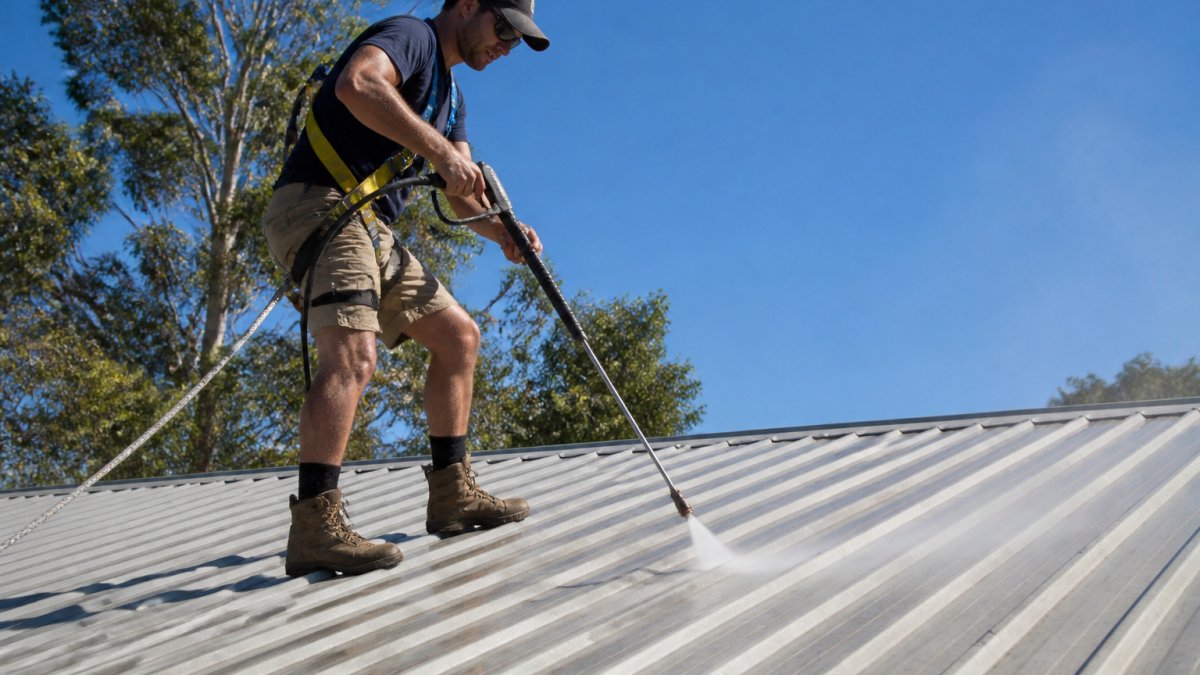
How to Clean a Colorbond Roof: Step-by-Step Process
The safest approach to cleaning a Colorbond roof combines controlled pressure, proper technique, and methodical planning. Most roof damage occurs because cleaners rush through the job or underestimate how sensitive the paint coating is to water pressure. We recommend a systematic process that prioritises the roof's integrity while removing mould, algae, moss, and dirt effectively.
Pressure Settings and Equipment
Start with ultra-low pressure settings, ideally between 800 and 1200 PSI for initial cleaning passes. Standard pressure washers typically operate at 2500-4000 PSI, which is far too aggressive for Colorbond. If you're using a pressure washer, fit it with a wide-angle nozzle (40-degree or wider) to distribute force across a larger area and reduce concentrated impact.
Distance matters significantly. Maintain at least 60 centimetres between the nozzle and the roof surface, and increase this distance if you notice any paint lifting or streaking. Equipment choice affects your control: commercial-grade machines offer better pressure regulation than consumer models, which is one reason professional cleaning services deliver safer results. Test your pressure on a small, inconspicuous roof section first, typically an area near the guttering where any damage is less visible.
Spray Technique and Nozzle Angle
Always direct water downward, following the slope of the roof panels. Spraying upward or at angles forces water beneath the roof sheets and creates the exact water intrusion problems you're trying to prevent. Use smooth, overlapping passes rather than concentrating spray on one spot. The nozzle should move continuously; stopping in one place even for a few seconds risks paint damage.
Hold the spray wand at a consistent angle and distance. Inexperienced cleaners often vary their technique mid-pass, creating uneven pressure that leaves streaks or damage patterns. Work methodically from the roof peak downward, allowing gravity to assist drainage. This prevents water pooling and reduces the risk of moisture seeping into seams or beneath panels.
Avoiding Water Intrusion
Water intrusion is the hidden cost of aggressive pressure washing. Once water penetrates beneath Colorbond sheets, it triggers rust formation that may not be visible for months or years. Avoid spraying directly into roof seams, ridge caps, flashing joints, or valleys. If these areas require cleaning, use soft washing with diluted chemicals and minimal pressure, or hand-scrub them with a soft brush.
Pay particular attention to roof penetrations, vents, antennas, and solar panel mounts. Water forced around these fixtures often finds pathways into the roof cavity. Use masking tape or temporary covers to protect vulnerable areas before you begin pressure washing. After cleaning, inspect all seams and joints to ensure water isn't pooling or running beneath the surface.
Colorbond Roof Cleaning Products: Choosing Safe Chemicals
The right cleaning chemicals remove mould, algae, and moss without damaging the Colorbond coating. Not all roof cleaning products are created equal, some contain harsh bleaches or acids that accelerate paint degradation or create runoff hazards for plants and waterways.
Mould, Algae, and Moss Removal
Mould, algae, and moss thrive in tropical and subtropical climates, making them common challenges for Far North Queensland properties. Sodium hypochlorite solutions (household bleach diluted appropriately) are effective for mould and algae but must be used cautiously on Colorbond because they can fade the paint over time if left to sit too long. Quaternary ammonium compounds (quats) are gentler alternatives that kill algae and mould without the bleaching effect.
Moss is trickier because it has root structures that penetrate surface dirt. Soft washing with a low-pressure rinse after applying a moss-killing agent works better than pressure washing alone. Many commercial roof cleaning products are specifically formulated for metal roofs and include surfactants that help the solution cling to vertical or sloped surfaces longer, improving effectiveness.
Dilution Ratios and Application
Never apply full-strength bleach or harsh chemicals directly to Colorbond. A typical safe dilution for sodium hypochlorite is 1 part bleach to 10 parts water, though this varies by product. Always follow the manufacturer's dilution instructions, over-concentration increases the risk of paint damage and environmental harm.
Apply cleaning solutions with a low-pressure sprayer or soft-wash system, allowing the chemical to dwell for 10-20 minutes before rinsing. This contact time lets the solution break down organic growth without requiring aggressive pressure to force it off. After the dwell period, rinse thoroughly with low pressure, starting from the roof peak and working downward. Incomplete rinsing leaves chemical residue that can degrade the paint finish or create streaks.
How Often to Clean a Colorbond Roof
Cleaning frequency depends on your environment, roof exposure, and the type of contamination present. In tropical regions with high humidity and regular rainfall, mould and algae can return within 12-18 months. Industrial areas with airborne dust or properties near the ocean exposed to salt spray may require cleaning annually.
Many property owners find that annual inspections catch problems early, allowing targeted cleaning of affected areas before contamination spreads across the entire roof. Professional cleaning every 2-3 years, combined with annual inspections, is a common maintenance rhythm that keeps Colorbond roofs in good condition without unnecessary expense. Your specific schedule should reflect local climate, roof orientation (north-facing roofs in the Southern Hemisphere accumulate more algae), and the presence of nearby trees or industrial sources of contamination.
Professional Colorbond Roof Cleaning: When to Call an Expert
Professional cleaning becomes necessary when roof access is difficult, contamination is severe, or you're uncertain about safe pressure settings. A trained technician understands the structural limits of Colorbond, knows how to diagnose water intrusion risks, and has equipment calibrated for safe operation on metal roofs.
Safety and Access Considerations
Roof work carries inherent risks, falls, electrical hazards from nearby power lines, and slips on wet surfaces are common dangers. Professional cleaners carry insurance, use proper fall protection equipment, and follow safe work practices that protect both the roof and the workers. If your roof is steep, multi-level, or has complex features like skylights or solar panels, professional access and cleaning significantly reduces the risk of injury or damage.
Electrical hazards are often overlooked by DIY cleaners. Power lines running near or over your roof create electrocution risks if water from a pressure washer contacts them. Professionals assess these hazards before beginning work and take precautions like de-energising nearby equipment or maintaining safe distances.
What Makes Professional Cleaning Different
Professionals use trade-grade pressure washers with precise pressure regulation, allowing them to dial in exactly the PSI needed for your specific roof type and contamination level. They understand the difference between soft washing and pressure washing, and they know when each method is appropriate. Most importantly, they carry liability insurance and offer warranties on their work, if damage occurs, they're accountable.
Our approach combines low-pressure rinsing, targeted chemical application, and careful attention to seams and penetrations. We provide fixed pricing in writing before we start, same-business-day responses to inquiries, and free on-site quotes so you understand exactly what the work involves. Our 5+ years of experience means we've encountered every type of Colorbond roof problem and know how to solve it safely.
Common Mistakes to Avoid When Pressure Washing Colorbond
The most frequent mistake is applying excessive pressure in a single pass. Cleaners often think "more pressure equals cleaner roof," but Colorbond's paint coating is designed for durability, not high-pressure resistance. Starting too high and then adjusting downward after damage appears is too late, the paint has already been compromised.
Another common error is spraying upward or at angles. Water forced beneath roof sheets creates moisture traps where rust develops silently for months before becoming visible. Similarly, concentrating spray on stubborn stains rather than using chemicals to break down contamination first leads to unnecessary pressure application. Rushing the job, skipping the chemical dwell time or inadequate rinsing, leaves streaks, residue, and incomplete cleaning that looks poor and may require re-cleaning within weeks.
Aftercare and Maintenance for Long-Term Protection
After your roof is cleaned, proper maintenance extends the results and protects the Colorbond coating. Allow the roof to dry completely before inspecting for any streaking or residue.
Inspect your gutters and downpipes after cleaning to ensure they're clear of debris and water is flowing freely. Blocked gutters create water pooling that accelerates algae growth and increases moisture exposure to roof seams. Trim overhanging tree branches to reduce leaf debris and improve roof ventilation, better airflow slows mould and algae regrowth.
Consider applying a protective roof coating after professional cleaning. These coatings create a barrier against UV damage, moisture, and contamination, extending the life of the Colorbond paint and reducing the frequency of cleaning needed.
| Maintenance Task | Frequency | Impact |
|---|---|---|
| Gutter clearing | Quarterly | Prevents water pooling and mould acceleration |
| Roof inspection | Annually | Catches early contamination before spread |
| Professional cleaning | Every 2-3 years | Removes stubborn growth and extends coating life |
| Tree trimming | As needed | Improves airflow and reduces debris accumulation |
| Protective coating | Every 5-7 years | Adds UV and moisture barrier for extended protection |
Pressure washing your Colorbond roof doesn't have to mean risking damage or water intrusion. If you're in Far North Queensland and uncertain about your roof's condition or the safest cleaning approach, JetSet Power Washing offers free on-site quotes where our team can assess your roof, explain the risks, and provide a fixed-price quote in writing.
Frequently Asked Questions
Can high-pressure washing damage a Colorbond roof?
Yes. High-pressure washing above 2000 PSI can dent, pit, or strip the protective paint coating on Colorbond panels, leading to corrosion and rust. Low-pressure methods (below 1500 PSI) combined with appropriate cleaning chemicals are safer. Always test on a hidden section first, and spray downward to prevent water forcing under roof sheets.
What pressure should you use to wash a metal roof?
For Colorbond and metal roofs, use 1000-1500 PSI maximum. Soft washing with ultra-low pressure (under 500 PSI) combined with chemical cleaners is ideal for mould and algae. Medium pressure (1500-2000 PSI) works for dirt and light contamination, but always adjust based on the roof's age, condition, and coating integrity. Test first.
What chemicals can I use to clean my Colorbond roof?
Sodium hypochlorite (diluted bleach solution, typically 1:10 or 1:20 ratio) effectively removes mould and algae. Biodegradable, pH-neutral cleaners designed for metal roofs are safer alternatives. Avoid harsh acids or abrasive compounds that corrode the paint finish. Always rinse thoroughly after application to prevent runoff damage and environmental harm.
How often should a Colorbond roof be cleaned?
In tropical climates with high moisture and frequent rain, clean Colorbond roofs annually or every 12-18 months to prevent mould and algae buildup. In drier regions, every 2-3 years may suffice. Inspect after heavy storms or if you notice visible discolouration, mould patches, or moss growth, these signal an immediate need for cleaning.
When should you hire a professional to clean a Colorbond roof?
Hire professionals if your roof is steep, high, or difficult to access safely; if you lack fall protection equipment; if the roof shows existing damage or corrosion; or if you're unsure about pressure settings and chemical compatibility. Professionals have trade-grade equipment, insurance, and experience preventing water intrusion and paint damage, worth the investment for valuable properties.
Can you clean a Colorbond roof without climbing onto it?
Yes, with the right equipment. Ground-level pressure washing using extended wands and low pressure can reach lower roof sections. Soft washing systems with long hoses allow chemical application from the ground. However, steep pitches, complex layouts, and high roofs require roof access. Professional cleaners assess whether ground-level work is viable or if safe roof access is necessary.