 blog
blog
Soft Washing vs Pressure Washing Roofs
Table of Contents
- What Is Soft Washing and How It Works
- What Is Pressure Washing and How It Differs
- Soft Washing vs Pressure Washing: Key Differences for Roofs
- Soft Washing Metal Roofs and Delicate Surfaces
- How Often to Soft Wash a Roof and Maintenance Schedules
- Soft Washing Roof Rinse Techniques and Post-Cleaning Care
- Roof Soft Washing Cost and Long-Term Value
- Why Professional Cleaning Matters: Safety and Damage Prevention
- Frequently Asked Questions
Last Updated: October 5, 2026
What Is Soft Washing and How It Works
Soft washing is a low-pressure method that uses biodegradable treatment solutions instead of high-pressure water to remove organic growth and grime.
The process targets the biological cause of discolouration, not just visible buildup.
For homeowners dealing with tropical mould and organic growth, soft washing delivers long-term prevention: the solution keeps working after application, protecting against regrowth.
What Is Pressure Washing and How It Differs
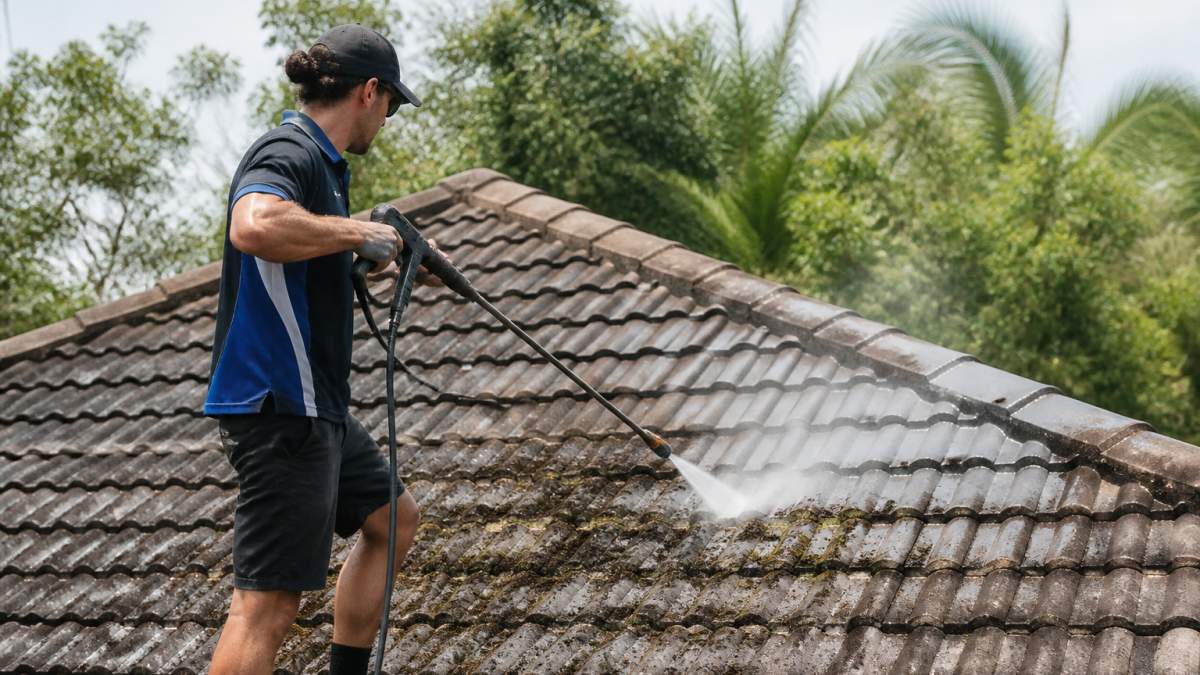
Pressure washing uses high-pressure water jets, typically 1,500 to 4,000 PSI, to blast away dirt and buildup. The force does the work, making it fast and effective on hard surfaces like concrete driveways and sealed stone.
The key difference is immediate versus long-term. Pressure washing delivers instant results, but as a force-based approach it only removes what's visible, leaving the organism's foundation intact so regrowth happens faster.
Pressure washing also carries real risks.
Soft Washing vs Pressure Washing: Key Differences for Roofs
The core difference between soft washing and pressure washing roofs is how each removes organic growth and what it does to the roof structure. Soft washing uses a treatment solution to kill moss, algae, and lichen at the root, then a low-pressure rinse.
Here's how they compare across the factors that matter most:
| Factor | Soft Washing | Pressure Washing |
|---|---|---|
| Water Pressure | 100-500 PSI (low) | 1,500-4,000 PSI (high) |
| Roof Safety | Safe for tiles, metal, paint | Risk of damage to delicate surfaces |
| Organic Growth Removal | Kills at root level | Removes visible growth only |
| Long-Term Results | Lasts 2-3 years | Regrowth in 6-12 months |
| Time to Complete | Slower (requires dwell time) | Fast (immediate results) |
| Best For | Roofs, render, cladding | Driveways, sealed concrete, patios |
Choosing by roof material
A one-size-fits-all recommendation is the most common mistake in roof cleaning advice. The right method depends on the covering, its fixing system, and the manufacturer's guidance.
- Concrete and terracotta tiles: The most common roof coverings and the most forgiving for soft washing. With pressure washing, high pressure can loosen bedding, crack pointing, and force water past the tile lap. Soft washing avoids all three. Most manufacturers specify low-pressure cleaning only and exclude pressure damage from warranty.
- Colorbond and painted steel: The painted finish is vulnerable. High pressure can strip the coating, expose the substrate, and accelerate corrosion at cut edges and fixings. Soft washing with a solution formulated for painted metal, followed by a low-pressure rinse, is standard. Confirm the coating system and warranty terms first.
- Zincalume and unpainted metal: These rely on a protective metallic coating that high-pressure cleaning can remove, shortening the roof's life. Soft washing is safer, and any solution must be compatible with the coating.
- Asphalt shingles and bituminous membranes: Less common here but found on outbuildings and older homes. Pressure can dislodge shingle granules and damage the mat, so soft washing with a gentle rinse is preferred.
- Slate and natural stone: These are rare but require the most care. Soft washing is the only sensible method; pressure washing can delaminate slate and erode softer stone.
What the manufacturers actually say
Roofing manufacturers and coating suppliers generally favour low-pressure cleaning and warn that high-pressure methods may void warranties. Check your roof's documentation or current product data sheet before booking. If it says low-pressure only, that rules out pressure washing regardless of what a contractor prefers.
When pressure washing is still appropriate
Pressure washing is not wrong everywhere, it is wrong on roofs. It suits concrete driveways, sealed pavers, exposed aggregate, and other hard, non-porous surfaces. The mistake is transferring that suitability to a roof, where the same force can drive water under tiles, strip coatings, and loosen fixings.
The mechanism that decides it
On a roof, water intrusion is the failure mode that matters. Coverings are designed to shed water, not resist it being pushed upwards or sideways. Once water gets past the covering it reaches sarking, battens, insulation, and ceiling linings, and the damage is often invisible until it shows as a stain or sag. Soft washing keeps water at low pressure and works with gravity, so the covering's water-shedding design does its job. That is why soft washing is the default for roofs.
Soft Washing Metal Roofs and Delicate Surfaces
Metal roofs, Colorbond, zincalume, or painted steel, need specialised treatment because water intrusion is the primary risk.
The approach is straightforward: apply a biodegradable solution formulated for metal, let it work, then rinse with low-pressure water. The solution kills algae and moss without force, simply removing the biological growth that discolours the surface.
Delicate surfaces like painted render and cladding face similar risks: high pressure can strip paint, crack render, and create hairline fractures that let water in.
How Often to Soft Wash a Roof and Maintenance Schedules
Soft washing results typically last 2 to 3 years before regrowth becomes noticeable, depending on climate and shade. Humid tropical regions may see regrowth sooner; drier areas can stretch beyond 3 years.
A sensible schedule is every 2 to 2.5 years, preventing heavy buildup without unnecessary cleaning cycles.
More frequent cleaning is viable if you prioritise curb appeal, real estate agents often schedule soft washing 4 to 6 weeks before open inspections. For ongoing maintenance, every 2 to 3 years balances cost and appearance.
Soft Washing Roof Rinse Techniques and Post-Cleaning Care
The rinse phase is where soft washing differs most from pressure washing. After the solution has worked (typically 15 to 30 minutes), a low-pressure rinse removes dead organic material and excess solution.
Technique matters: rather than directing water straight at tiles, professionals rinse from the ridge downward, working with gravity to guide water away from seams and under-tile gaps.
Post-cleaning care is minimal but important. Avoid heavy rain for 24 to 48 hours if possible, so the protective residue can set; rain immediately after is not a disaster, but you lose some long-term protection.
Roof Soft Washing Cost and Long-Term Value
Soft washing roof cost depends on roof size, material, access, and growth level, and you should expect a premium over pressure washing because the process takes longer and uses specialised solutions. Get a free on-site quote from a professional. JetSet Power Washing offers fixed pricing in writing so there are no surprises.
What drives the price
Most quotes are built from a handful of variables. Understanding them helps you compare fairly rather than on the headline number.
- Roof size and pitch: Measured in square metres of roof area, not floor area. Steeper roofs need more safety setup and slower work.
- Roof material and condition: Tiles, metal, and shingles each need different solutions and rinse techniques. Heavy moss or lichen takes longer and may need a second application.
- Access and height: Single-storey homes with clear access are simplest. Double-storey, steep, or obstructed roofs add setup time and equipment.
- Growth severity: A light algal film is quick. Established moss with visible clumps, or growth in valleys and behind ridges, takes more dwell time and solution.
- Gutter and downpipe clearing: Dead growth rinsed off the roof has to go somewhere. Clearing gutters and checking downpipes is often an add-on.
- Water access and runoff management: Properties where runoff must be captured or diverted may attract a surcharge.
How to compare quotes
Ask each provider for the same information so you compare like with like:
- A fixed price in writing, not an hourly rate or a "from" figure.
- The rinse pressure range.
- The treatment product and its dilution.
- Whether gutter clearing and a post-clean inspection are included.
- Their insurance cover and how they handle pre-existing damage.
A significantly cheaper quote usually means something is missing, often rinse pressure is higher than it should be, the treatment is weaker, or gutters are excluded.
The lifecycle cost picture
Because soft washing results last 2 to 3 years instead of 6 to 12 months, you clean less often. Over 10 years that means roughly three to five soft washes versus ten or more annual pressure washes.
The repairs are easy to overlook. Loose ridge tiles, cracked pointing, stripped coatings, and water-stained ceilings cost more to fix than the cleaning ever did. A single re-bed and re-point of a tiled roof, or a repaint of a Colorbond roof, can exceed a decade of soft washing.
Where the money actually goes
A soft washing quote covers labour and safety setup, the treatment solution, the low-pressure rinse, and dwell time. Pressure washing quotes are often lower because the job is faster, but that reflects less time on the roof, not better value.
For commercial property managers handling maintenance audits, soft washing demonstrates due diligence, protecting the asset, not just removing visible dirt. For homeowners selling, soft washing 4 to 6 weeks before listing ensures the roof looks pristine for inspections and photographs without pressure-washing damage derailing a sale.
Why Professional Cleaning Matters: Safety and Damage Prevention
DIY soft washing or pressure washing introduces real risks. Working at height is inherently dangerous, and falls remain a leading cause of serious injury.
Beyond safety, professionals can assess your roof and choose the right method. Some materials tolerate slightly higher pressure; others don't.
JetSet Power Washing brings 5+ years of experience to every job. Our team knows how to clean tiles, Colorbond, and metal roofs safely.
The difference between a professional and an amateur is a roof that looks clean and lasts longer versus one that looks clean today and costs thousands to repair tomorrow.
Frequently Asked Questions
Is soft washing better than pressure washing for roofs?
Neither is universally 'better', it depends on your roof material and what you're removing. Soft washing is safer for delicate surfaces like tiles, terracotta, and Colorbond metal roofs because it uses low water pressure combined with cleaning solutions to kill moss, algae, and lichen at their root. Pressure washing works faster on concrete driveways and tough buildup but carries a high risk of damage to roof tiles and painted surfaces. For most roofs, soft washing offers superior long-term results and protection.
Do you rinse the roof after soft washing?
Yes, rinsing is essential after soft washing. Once the cleaning solution has had time to work (typically 15-30 minutes), a low-pressure rinse removes the loosened growth and chemical residue. This gentle rinse step is what distinguishes soft washing from pressure washing, it's thorough without forcing water into gaps or damaging the surface. Proper soft washing roof rinse technique prevents water intrusion and ensures the roof dries cleanly.
How much does soft washing a roof cost?
Roof soft washing cost depends on roof size, material, level of contamination, and your location. Pricing typically reflects the time required for application, dwell time, and careful rinsing. For an accurate quote, contact a professional who offers free on-site assessment, they can evaluate your specific roof condition and provide transparent, fixed pricing in writing. Avoid estimates over the phone; every roof is different.
Can pressure washing damage roof tiles or metal roofs?
Yes, high-pressure washing poses significant damage risk. It can crack or loosen ceramic and terracotta tiles, strip protective coatings from Colorbond and painted metal, and force water into roof cavities, causing leaks and structural damage. Pressure washing is suitable for concrete and tough industrial surfaces, but most residential roofs, especially tiles and metal, require the gentler approach of soft washing to remove buildup safely without compromising the surface or creating water intrusion problems.
Your roof is one of your property's most visible and expensive assets. Soft washing protects it while delivering results that actually last. Get a free on-site quote from JetSet Power Washing and see how our specialised soft washing approach can refresh your exterior safely and affordably.