 ultimate-guide
Benefits of Soft Washing for Delicate Surfaces
Table of Contents
- What Soft Washing Actually Does to Delicate Surfaces
- Soft Washing vs Pressure Washing: Why the Method Matters
- Is Soft Washing Safe for Render, Paint and Colorbond?
- Eliminating Organic Growth Without Damaging Your Exterior
- How Often to Soft Wash a House in the Tropics
- Curb Appeal, Property Value and Preventative Maintenance
- DIY vs Professional Soft Washing: Risks and Cost-Benefit
- Frequently Asked Questions
Last Updated: September 19, 2026
What Soft Washing Actually Does to Delicate Surfaces
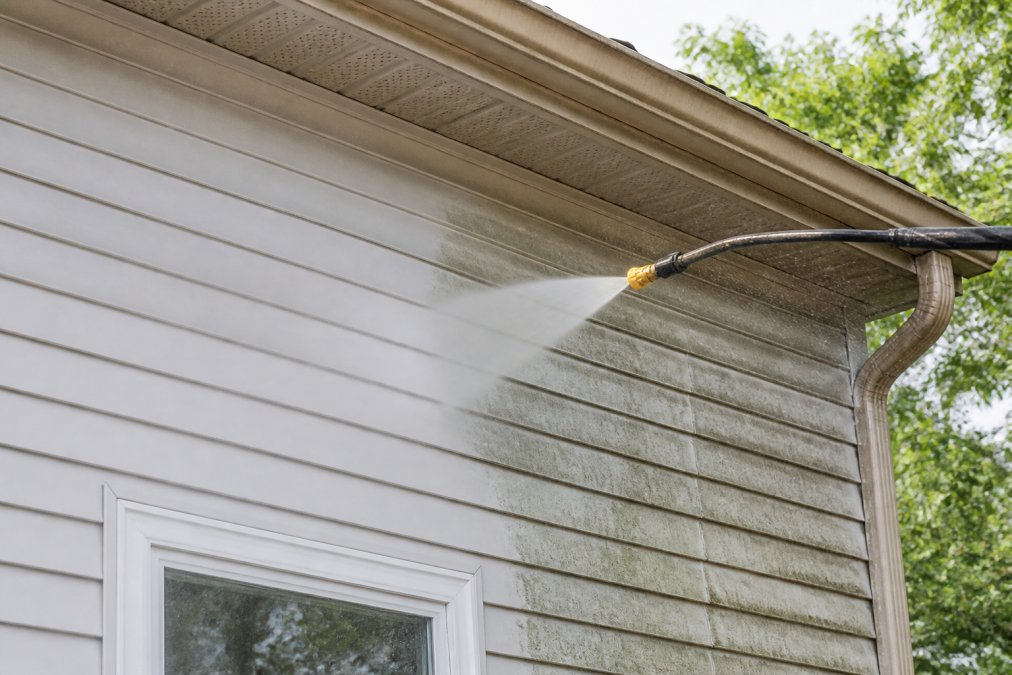
Soft washing is a low-pressure exterior cleaning method that combines water-based cleaning solutions with gentle application to remove organic growth from sensitive surfaces without damage. This guide from JetSet Power Washing explains how it works and which materials benefit most.
The core insight: you don't need force to clean, you need chemistry and time.
Low-Pressure Cleaning and Biodegradable Solutions
Traditional cleaning relies on kinetic energy, water hitting a surface hard enough to dislodge dirt. Soft washing instead uses biodegradable cleaning solutions that break down organic growth chemically, then rinses at pressures similar to a garden hose.
The active ingredients include surfactants that help the solution penetrate and lift contaminants, plus agents that kill mould spores and algae at the root rather than bleaching the surface.
Soft Washing vs Pressure Washing: Why the Method Matters
The critical difference between soft washing vs pressure washing comes down to pressure levels. Soft washing uses low pressure (typically under 500 psi) with cleaning solutions, while pressure washing relies on high pressure (1,500 to 4,000 psi) to force dirt away.
High-Pressure Damage and Surface Integrity
High-pressure damage is real and often invisible until months later. Water forced into render compromises the bond with the wall beneath. On Colorbond, it strips protective coatings and accelerates corrosion at fixing points. On painted surfaces, it drives water behind the paint film, causing blistering and peeling.
| Surface Type | Safe Method | Risk with High Pressure |
|---|---|---|
| Rendered walls | Soft wash | Cracks, moisture ingress |
| Colorbond roofing | Soft wash | Coating strip, corrosion |
| Painted weatherboard | Soft wash | Paint blistering, peeling |
| Concrete driveway | Pressure wash | Minimal risk |
| Timber decking | Soft wash | Splintering, grain raising |
Is Soft Washing Safe for Render, Paint and Colorbond?
Yes, soft washing is safe for render, paint and Colorbond when performed correctly with appropriate solutions and low pressure. Manufacturers specify gentle cleaning to maintain warranty coverage and surface integrity.
Render Cleaning and Painted Exterior Protection
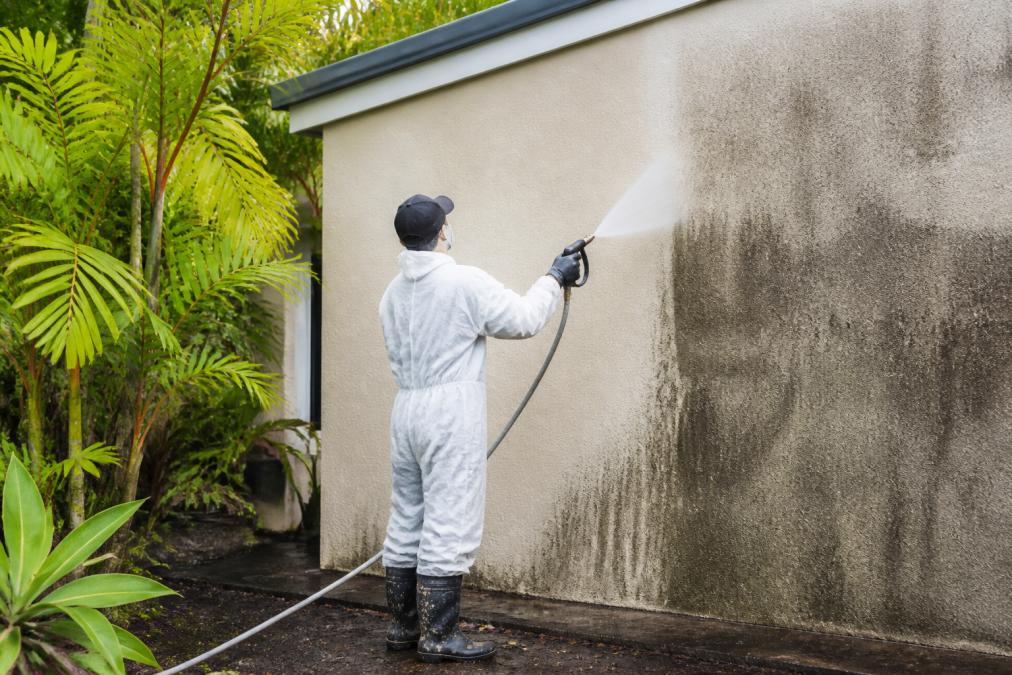
Render cleaning with soft washing addresses the porous nature of cement-based finishes. Render absorbs moisture, and in humid conditions that feeds mould and algae within the surface itself. High pressure only removes visible growth while driving water deeper into the substrate.
Eliminating Organic Growth Without Damaging Your Exterior
Organic growth in tropical climates is relentless. Mould spores, algae and mildew colonise any surface that stays damp, and in Far North Queensland that means most exterior surfaces for much of the year. What separates a soft wash that works from one that fails is understanding what you are killing, because mould, algae and mildew do not respond identically.
What You Are Actually Killing
Algae (commonly Gloeocapsa magma on roofs and walls) is a photosynthetic organism that stains surfaces black or greenish-black and feeds on moisture and the limestone filler in many asphalt shingles. Because it photosynthesises, it is comparatively easy to kill, sodium hypochlorite at the right concentration disrupts its cell structure on contact.
Why Dwell Time and Wetting Matter More Than Concentration
A common mistake is assuming a stronger mix works faster. In practice, concentration and dwell time trade off, and the surface must stay wet for the chemistry to keep working, once it dries, the reaction stops.
Rinsing and Regrowth
After dwell time, the surface is rinsed at low pressure. Rinsing removes dead organic matter, residual solution and the food source that would feed the next colony. A surface killed but not rinsed can regrow faster than one never treated, because dead organic matter holds moisture against the substrate.
Matching the Treatment to the Surface
Not every surface tolerates the same solution. Unsealed timber and some natural stone are sensitive to hypochlorite and may discolour or degrade, so a gentler surfactant-based cleaner with a longer dwell time is safer. On Colorbond, painted render and tiles, a standard soft wash mix is appropriate if it isn't allowed to dry on the surface.
How Often to Soft Wash a House in the Tropics
Homes in tropical climates typically need soft washing every 12 to 18 months, versus every 2 to 3 years in cooler regions. The humidity, rainfall and warmth that make the tropics beautiful also accelerate organic growth dramatically.
Curb Appeal, Property Value and Preventative Maintenance
Exterior appearance directly affects how buyers, tenants and visitors perceive a property. Stained render and mouldy roofs signal neglect even when the building is sound; clean surfaces communicate that the property has been maintained.
DIY vs Professional Soft Washing: Risks and Cost-Benefit
DIY soft washing is possible with the right equipment, but the risks are higher than most homeowners expect. The biggest issues are chemical safety and application technique, the gap between a safe DIY job and a costly mistake comes down to dilution, equipment handling and runoff management.
Chemical Dilution: Getting the Ratio Wrong Is the Most Common Failure
Sodium hypochlorite is the active ingredient in most soft wash solutions, sold at varying strengths. Household bleach is typically around 4 per cent available chlorine; trade-grade hypochlorite can be 10 to 12 per cent or higher. A mix safe on a concrete driveway can etch a Colorbond panel or kill a garden bed if the ratio is wrong.
Over-strength solution risks:
- Discolouring or etching Colorbond and painted metal
- Killing lawn, garden beds and ornamental plants via runoff
- Degrading unsealed timber and some natural stone
- Irritating skin, eyes and airways during application
Under-strength solution risks:
- Failing to kill mould hyphae, leading to regrowth within weeks
- Wasting product and time on a job that has to be redone
Equipment Handling and Personal Protection
Soft washing still involves pressurised equipment and aggressive chemistry. Minimum PPE includes chemical-resistant gloves, sealed eye protection and a respirator rated for the solution. Concentrated hypochlorite burns skin; mist irritates airways.
Equipment-specific risks homeowners commonly underestimate:
- Pump and nozzle damage from running undiluted concentrate through a soft wash system
- Chemical burns from splash-back when applying overhead (roofs, eaves)
- Slip hazards on wet, chemically treated hard surfaces
- Cross-contamination if the same equipment is later used for drinking water or garden spraying
Runoff and Environmental Management
Runoff is the risk most DIY guides skip. Soft wash solution running off a roof or wall carries hypochlorite and dead organic matter into garden beds, stormwater and waterways. In most Australian jurisdictions, discharging cleaning chemicals into stormwater is regulated, and many councils require runoff to be contained or neutralised before it leaves the property.
Practical steps include:
- Pre-wetting and covering garden beds and lawns near the work area
- Diverting runoff away from stormwater drains where possible
- Neutralising residual hypochlorite before it reaches sensitive areas
- Avoiding application before forecast rain, which spreads runoff further
The Cost-Benefit Reality
The calculation changes once you account for:
- Equipment hire or purchase that may only be used once or twice a year
- The cost of redoing a failed job (under-strength mix, insufficient dwell time)
- The cost of repairing damage from an over-strength mix or wrong technique
- The value of your time across a full day on a roof or two-storey wall
- Insurance and liability if runoff damages a neighbour's property
Professional soft washing removes those variables. At JetSet Power Washing, we provide free on-site quotes, respond the same business day, and give a fixed price in writing before work begins. With over 5 years of experience and trade-grade equipment, we handle render, Colorbond, tiles and metal roofs using methods matched to each surface, with runoff managed to protect your landscaping.
Frequently Asked Questions
How often should a house be soft washed?
In tropical conditions with high humidity and frequent rain, most homes need soft washing every 12 to 18 months. Properties surrounded by dense vegetation or near coastal areas may need it every 6 to 12 months because organic growth returns faster. A preventative maintenance schedule keeps mould and algae from taking hold, which protects render, paint and roof surfaces between cleans. If you notice green or black staining returning, that is your cue to book.
Is soft washing safe for render and painted exteriors?
Yes. Soft washing uses low pressure combined with biodegradable cleaning solutions to kill mould, algae and mildew at the root. The low-pressure approach means render, painted surfaces and cladding are not subjected to the force that causes cracks, water ingress or paint stripping. The cleaning solution does the work, not the pressure. This is why soft washing is the recommended method for delicate exterior surfaces that would be damaged by high-pressure cleaning.
Is soft washing better than pressure washing for delicate surfaces?
For delicate surfaces like render, painted timber, Colorbond and tiled roofs, soft washing is the safer choice. Pressure washing relies on force to blast away grime, which can strip paint, crack render, force water behind cladding and damage shingle granules. Soft washing uses low pressure and cleaning solutions to eliminate organic growth at the source. The result lasts longer because the mould spores and algae roots are killed, not just knocked off the surface.
Do you rinse the roof after soft washing?
Yes. After the cleaning solution has had adequate dwell time to kill mould and algae, the roof is gently rinsed with low pressure. This removes dead organic matter and residual solution without forcing water under tiles or panels. The rinse is a critical step because it clears the surface so you can see the results and ensures no cleaning residue is left behind. Your gutters and downpipes are also checked as part of the process.