 Ultimate guide
How to Prepare a House Exterior for Sale: The Complete Guide
Last Updated: November 2, 2026
Quick Summary
To prepare a house exterior for sale, work in sequence: inspect and repair first, then clean from the roof down, and paint only where the existing coating is failing. Cleaning is the lowest-cost, highest-visibility step, so do it before listing photos.
- Walk the perimeter and photograph every wall, eave and fence line before starting work.
- Clean the roof and gutters first, then walls, then paths and driveways.
- Use soft washing on render, cladding, painted weatherboard and Colorbond roofing.
- Repaint only when paint lifts under a fingernail test or fails widely.
- With one weekend, prioritise the entry zone, then paths, gutters and garden edges.
Table of Contents
- Why the House Exterior Decides the First Impression
- Your Pre-Sale Home Maintenance Checklist
- Exterior House Cleaning Before Selling: Where to Start
- Should I Paint My House Before Selling?
- Kerb Appeal Ideas Before Selling That Cost Little
- Prioritising the Work by Budget, Time and Likely Return
- Getting the Exterior Photo and Showing Ready
- Book a Free On-Site Exterior Clean Before You List
- Frequently Asked Questions
Why the House Exterior Decides the First Impression
Buyers form an opinion before they step out of the car. A property that photographs badly because of mould on render or moss across a driveway can make a poor first impression, regardless of the kitchen. Does exterior cleaning increase property value?
Preparing the exterior for sale is a sequence: inspect, repair, clean, then decide whether paint is needed. Get the order right and the result is stronger; get it wrong and grime can reappear under fresh paint.
Your Pre-Sale Home Maintenance Checklist
A pre-sale home maintenance checklist is a surface-by-surface inspection and repair plan completed before listing. It covers paint condition, timber, roofing, gutters, paths and hard surfaces, and should be finished before cleaning and painting begin.
Work through it in this order:
- Walk the perimeter and photograph every wall, eave and fence line
- Probe timber trim for soft sections
- Check gutters for rust, sagging and blockages
Inspect the Exterior Surface by Surface
Start with existing paint and surface condition. Press a fingernail into painted timber; if the coating lifts cleanly, it has lost adhesion and will fail under weather. On render, tap gently for hollow sections that suggest separation from the substrate.
Check weatherboards, fascia, window trim and door frames separately, these hold moisture longest and deteriorate first.
Repairs to Tick Off Beyond Paint
Paint hides colour problems, not structural ones. Replace rotten wood siding before any coating goes near it, and re-seal failed joints around windows.
Watch out: painting over damp or decaying timber traps moisture and accelerates rot, so a skipped repair becomes a much larger cost at building inspection.
Exterior House Cleaning Before Selling: Where to Start
Exterior house cleaning before selling should begin at the top and work downward: roof first, then walls, then paths and driveways.
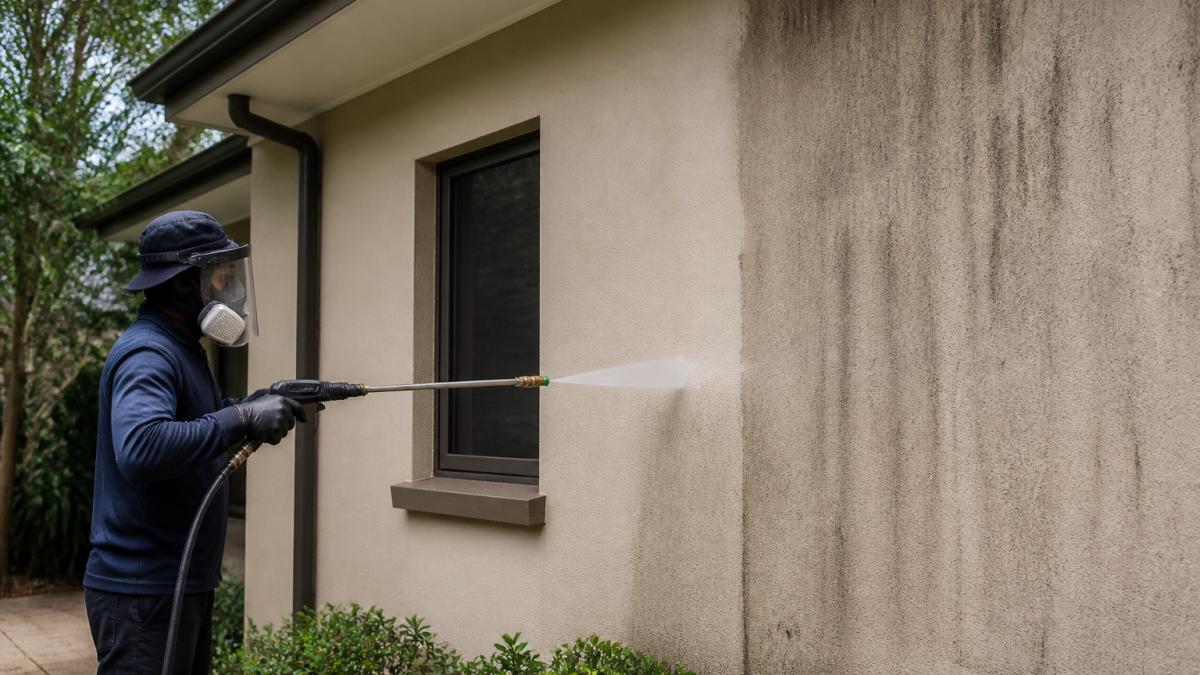
Start with the roof and gutters, because everything you wash off flows down. Clear debris, then clean the walls. Finish with hard surfaces so runoff doesn't re-soil what you've already cleaned.
Tackling Mould, Mildew and Tropical Grime
Warm, humid conditions make mould and mildew a recurring problem on north-facing walls, shaded eaves and fences.
Delicate surfaces need care. Render, Colorbond and painted cladding can all be damaged by aggressive methods. Benefits of soft washing for delicate surfaces explains the safe methods.
Pressure Washing Versus Soft Washing
Pressure washing versus soft washing comes down to the surface. High pressure suits concrete driveways and hard paving. Soft washing, which relies on low pressure plus a cleaning solution, suits paint, render, cladding and metal roofing.
If you're unsure which suits your property, this comparison of soft washing and high pressure cleaning sets out the trade-offs.
| Surface | Recommended Method | Why |
|---|---|---|
| Concrete driveway | High pressure | Withstands force; lifts oil and tyre marks |
| Rendered walls | Soft wash | Prevents cracking and water intrusion |
| Colorbond roof | Soft wash | Avoids coating damage and fastener loosening |
| Painted weatherboard | Soft wash | Protects existing paint adhesion |
| Tiled roof | Soft wash | Preserves tiles and ridge capping |
Should I Paint My House Before Selling?
Repaint only when the existing paint is failing. If the coating is sound, clean and touch up instead. A fresh coat of neutral colours can help buyers, but painting over grime or damp wastes money.
Preparing Surfaces if You Do Repaint
Surface preparation decides whether the new paint lasts. Scrape loose and peeling paint back to a firm edge.
Wash the walls and let them dry fully.
Watch out: painting in humid or wet weather conditions traps moisture under the film, causing blistering within months.
If lead paint may be present on an older home, treat removal as a specialist job; disturbing it creates a health hazard.
Kerb Appeal Ideas Before Selling That Cost Little
Buyers judge the whole approach to a property, the path, the entry, the fence line, the gutters, before they register the wall colour. These fixes can change that first read for little spend.
The Entry Zone: Where Buyers Slow Down
The front door and its surroundings carry disproportionate weight because buyers pause there while the agent unlocks. Work through this zone first:
- Door hardware. Replace a tarnished handle, letterbox or house number with a matching set in a modern finish; mismatched, corroded fittings read as neglect.
- House numbers. Make them legible from the street and consistent in style.
- Entry lighting. Clean the diffuser, replace blown globes, and check the light illuminates the door and path after dark.
Paths, Driveways and Fence Lines
Hard surfaces frame the house in every listing photo, so treat them as part of the facade:
- Sweep and edge paths so the line between paving and garden is crisp.
- Re-sand or re-point loose paving joints where it is a straightforward DIY job; leave lifted or unstable sections to a tradesperson.
- Wash down the fence line and gate. A sticking gate or a sagging hinge is a five-minute fix that removes a distraction.
Gutters, Roof Line and Visible Drainage
Buyers and building inspectors both look up. From ground level:
- Clear leaves and debris from gutters and downpipes so water flows away from the house (Home maintenance for extreme weather).
- Check for rust streaks, sagging sections or disconnected downpipes and have them repaired before listing.
- Confirm stormwater discharges away from the footings rather than pooling against the wall.
These are inspection items as much as presentation items, so they belong on the pre-sale list rather than the cosmetic one.
Garden and Lawn Edges
Landscaping does not need a redesign to lift a facade:
- Mow, edge and water the lawn in the days before photography.
- Trim shrubs back from windows, paths and the fence line so they don't obscure the house.
- Remove dead plants, empty pots and stored equipment from sightlines.
What to Skip
Not every cheap idea is worth the time. Avoid repainting fences or rendering garden walls purely for sale unless they are visibly failing, the return is uncertain and the spend is better directed at cleaning and the entry zone. Likewise, skip decorative additions such as new planters or ornaments; they personalise the property rather than neutralise it.
A Quick Priority Order
If you have a single weekend, work in this order: entry zone, then paths and fence line, then gutters and roof line, then garden edges. That sequence front-loads the elements buyers see first and inspectors check first, and it keeps the spend low.
Prioritising the Work by Budget, Time and Likely Return
The biggest mistake sellers make on the exterior is treating every job as equally urgent. Some work changes how the house reads from the street in an afternoon; other work costs thousands and barely registers in a listing photo. The framework below sorts the exterior into tiers so you can decide what to do, defer, or leave alone.
Tier 1: Clean and Declutter (Lowest Cost, Fastest, Highest Visibility)
Cleaning is often an affordable way to change how the exterior reads. Pressure cleaning Cairns residential property prices break down the costs.
- What it covers: roof and gutters, walls and cladding, paths, driveways, fences and the entry zone.
- Why it comes first: grime, mould and moss signal neglect more loudly than faded paint and appear in every listing photo.
- Typical effort: a professional exterior clean is usually a single visit; DIY cleaning can take a weekend or more depending on size and access.
If you do nothing else before listing, do this tier.
Tier 2: Repair What an Inspection Will Find (Moderate Cost, Moderate Time)
Repairs sit second because a building inspection will surface them anyway.
- What it covers: rotten or soft timber trim, loose boards, cracked render, failed sealant around windows and doors, lifted tiles, loose flashing, gutter and downpipe faults, and drainage that pools against the house.
- Why it comes second: these turn a cosmetic conversation into a price reduction; fixing them before listing removes the lever.
- Typical effort: varies widely. Re-sealing joints and securing loose trim are DIY-scale; re-bedding tiles, replacing rotten siding and correcting drainage usually need a tradesperson.
Tier 3: Paint, But Only Where It Is Failing (Highest Cost, Slowest, Most Conditional Return)
Painting is the largest exterior spend and the one most often unnecessary. The rule is straightforward: repaint where the existing coating is failing, and clean and touch up where it is sound.
Signs the coating is failing and paint is justified:
- Paint lifts cleanly under a fingernail test on multiple walls.
- Chalking, blistering or flaking is widespread rather than isolated.
- Bare timber or substrate is exposed in more than a few spots.
Signs paint is not the right spend:
- The coating is sound and the issue is surface grime, which cleaning will resolve.
- The problem is isolated to one elevation or the trim, where a targeted touch-up is cheaper than a full repaint.
- The weather window is poor, painting in humid or wet conditions traps moisture and causes blistering.
Where a repaint is justified, choose neutral colours and a finish suited to the substrate, and complete the surface preparation properly. Preparation, not the paint itself, decides how long the result lasts.
How to Decide Under Time Pressure
If you are listing within a fortnight: book the clean, fix the inspection-visible repairs, and touch up paint only where it is obviously failing.
If you have a month or more, add the Tier 3 assessment and, where justified, a repaint with a proper weather window.
Where the Budget Goes Furthest
A full repaint is worth considering only when the coating itself is the problem.
Getting the Exterior Photo and Showing Ready
Photograph in even light, ideally early morning or late afternoon. Wet down paths before shooting, clear bins and hoses from frame, and shoot from the street to capture the full facade.
Before each showing, do a quick pass: sweep the entry, wipe handrails, and check that gutters aren't overflowing.
Book a Free On-Site Exterior Clean Before You List
The gap between a tired exterior and a presented one is usually a single clean, done properly and in the right order. See our full exterior clean, roof to driveway service.
We clean roofs, walls, paths and hard surfaces, and our soft washing is safe for paint, render, cladding and Colorbond. We respond the same business day and quote on site, free.
Get started with JetSet Power Washing and put your property's best face forward before the first inspection.
Frequently Asked Questions
How long before listing should I prepare the house exterior?
Start four to six weeks out so there is time for cleaning, repairs and any painting without rushing. Book exterior cleaning first, because washing reveals what actually needs fixing. If you plan to repaint, allow drying time and suitable weather between washing and painting.
How do I clean a house exterior before a sale?
Work top to bottom: clear gutters and cobwebs, wash walls and cladding, then driveways and paths. Tropical grime, mould and mildew need a cleaning solution plus dwell time, not just high pressure. Soft washing is the safer choice for render, painted surfaces and Colorbond roofs because it cleans at low pressure. Once surfaces are dry, check for damage the dirt was hiding and note anything needing repair before photos.
Should I paint my house exterior before selling?
Paint only when the existing coating is failing, faded or an unusual colour that narrows buyer appeal. A fresh coat in a neutral tone can lift kerb appeal, but it is expensive and buyers often discount for obvious defects anyway. If paint is sound, a proper clean is usually the better return. If you do repaint, scrape loose paint, sand edges, repair bare wood and prime before topcoating for a finish that lasts.
Should I hire a professional to pressure wash my house before selling?
For render, painted cladding, Colorbond and tiled roofs, a professional using soft washing is the safer option. High pressure can crack render, strip paint and force water behind cladding, which is exactly the damage sellers cannot afford before inspections. Ask for a fixed price in writing and confirm the method matches your materials before booking.
What should I fix on the outside of my house before selling?
Prioritise anything a buyer or inspector will notice: cracked render, rotten timber trim, damaged gutters, loose roof tiles, broken fence palings, sticking doors and failed seals. Clear gutters, remove clutter and tidy garden beds. Fixing small defects signals a well-maintained home, while ignoring them invites buyers to assume bigger problems. Handle safety items like loose handrails and trip hazards early, and keep receipts for any trade work completed.
Which exterior repairs add the most value when selling?
Cleaning, gutter maintenance and fixing visible damage can be cost-effective steps because they change how buyers judge the whole property. Repainting can help when the current finish is poor, but it costs more and the return varies. Prioritise work that removes doubt: clean surfaces, sound paint, secure fences and tidy presentation. Spend on cosmetic painting only after the cleaning and repair basics are done.