 How-to
How to Clean Tropical Mould from Roof Tiles Safely
Table of Contents
- Why Tropical Mould Takes Hold on Roof Tiles
- Identifying Mould, Lichen, and Algae on Your Roof
- Is Pressure Washing Roof Tiles Safe?
- Soft Washing Roof Tiles: The Safer Cleaning Method
- Roof Tile Mould Removal Products That Work
- Step-by-Step: Cleaning Tropical Mould from Roof Tiles
- Preventing Mould on Roof Tiles Long-Term
- Conclusion
- Frequently Asked Questions
Last Updated: October 4, 2026
Why Tropical Mould Takes Hold on Roof Tiles
Tropical mould grows fast on roof tiles because the climate gives it heat, constant moisture, and shade. In Far North Queensland, the wet season leaves roofs damp for days or weeks, the perfect breeding ground for mould, algae, and lichen.
Most homeowners first notice a dark stain spreading across the tiles. By then, the growth has usually been there for months.
How Humidity and Rainfall Drive Mould Growth
Mould spores are always in the air, settling on your roof and waiting. When humidity stays high and rain keeps tiles wet, they germinate and spread.
It is worse on the south side of a roof, which gets less sun, and trees or nearby buildings block airflow.
This guide from JetSet Power Washing explains how to clean tropical mould from roof tiles without damaging them.
Identifying Mould, Lichen, and Algae on Your Roof
Each growth type looks different and needs a different response. Getting this wrong means you waste time on the wrong treatment.
- Mould: Black or dark brown patches. Often fuzzy or slimy when wet.
- Algae: Flat green or black staining. Common on concrete and terracotta tiles.
- Lichen: Crusty patches in grey, green, or yellow. Hard to remove by hand.
- Moss: Soft and spongy. Grows in gaps and holds water against the tile.
Black Stains vs Green Growth: What You're Looking At
Green growth is usually moss or algae on the surface. Black staining is often mould or algae that stains deep into porous tiles like terracotta and concrete.
Lichen is the toughest. It anchors itself into the tile surface and needs chemical treatment to loosen it before removal. Manual scrubbing alone will not shift it.
Is Pressure Washing Roof Tiles Safe?
No. High-pressure water blasting is not safe for most roof tiles. It can crack tiles, strip protective coatings, and force water under the surface.
This is the biggest mistake we see: homeowners hire a general pressure cleaner who blasts the roof at full force. The tiles look clean for a few weeks, then crack or break down and mould returns worse than before.
What High-Pressure Water Blasting Does to Tiles
High-pressure water blasting damages tiles in several ways:
- It strips the top layer, leaving the tile porous and exposed
- It forces water into cracks, which then expands and splits the tile
- It can dislodge ridge caps and flashing
- It blasts protective coatings off Colorbond and metal roofs
The damage is not always visible straight away. It shows up months later as cracked tiles and leaks.
Soft Washing Roof Tiles: The Safer Cleaning Method
Soft washing is the safe way to clean roof tiles, using low pressure and a cleaning solution to kill mould at the source rather than blasting it off.
This approach is safe for tiles, Colorbond, and metal roofs, plus paint, render, and cladding on the rest of your home.
At JetSet Power Washing, we use soft washing for every roof clean, protecting your tiles' surface integrity instead of wearing them down.
Roof Tile Mould Removal Products That Work
The right product depends on your roof material: a treatment safe on concrete can etch a glazed tile or corrode metal. Most guides skip this and treat every roof the same.
Match the Product to the Tile
- Terracotta and unglazed concrete: Porous, so they hold mould deep in the surface. A sodium hypochlorite-based soft wash at low concentration works well because it penetrates and kills the root. Avoid strong acids, they eat into the porous body and leave a permanently chalky finish.
- Glazed tiles: The glaze is a thin glass layer. Abrasive scrubbing or high-strength acid dulls it. Use a mild surfactant-based cleaner with a low dwell time, and never scrub with anything stiffer than a soft-bristle brush.
- Colorbond and metal roofs: The painted coating is the vulnerable part. Sodium hypochlorite is acceptable at low concentration if you pre-wet and rinse thoroughly, but never let it dry on the surface. Avoid hydrochloric or phosphoric acid entirely, they corrode the coating and void the warranty.
- Fibre cement and slate: Old fibre cement may contain asbestos if installed before the 1980s. Do not dry-scrub or pressure-wash it. If in doubt, treat it as a professional job and have it assessed first.
Key Ingredients and What They Do
- Sodium hypochlorite: The main mould killer. Works fast on black staining. Concentration matters, most residential soft wash mixes sit around 1-2% available chlorine, but always follow the label.
- Surfactant: Helps the solution cling to the tile instead of running straight off. This is what makes dwell time effective on a pitched roof.
- Acetic acid or distilled vinegar: A gentler option for light growth and spot treatment on glazed or painted surfaces.
- Fungicide or residual inhibitor: Slows regrowth after cleaning. Useful on north-facing roofs that stay damp.
Australian Regulatory and Safety Context
Cleaning products sold for roof use are regulated under the Australian Pesticides and Veterinary Medicines Authority (APVMA) if they make a biocidal claim.
Under Work Health and Safety laws, anyone working on a roof, including a homeowner, must manage the risk of falls.
Never mix sodium hypochlorite with ammonia or acid-based cleaners. The reaction releases toxic chlorine gas. This is a common and dangerous mistake.
How to Apply Treatment and Get Dwell Time Right
Dwell time is how long the solution sits on the roof before rinsing, this step matters more than the product itself.
- Too short: the mould survives and regrows fast.
- Too long: the solution dries out and stops working, and on metal, drying can cause corrosion.
- Right timing: the growth dies and rinses away cleanly. On a mild day, most soft wash solutions need 10-20 minutes of contact. In hot sun, work in smaller sections so the solution never dries.
Always wet the roof first, apply from the bottom up, and keep the surface damp during the dwell period. Rinse from the top down. On glazed tiles, reduce dwell time and rinse sooner to protect the finish.
APVMA registered products search
Safe Work Australia roof work guidance
Step-by-Step: Cleaning Tropical Mould from Roof Tiles
Here is the safe process, in order. Skipping steps is how roofs get damaged.
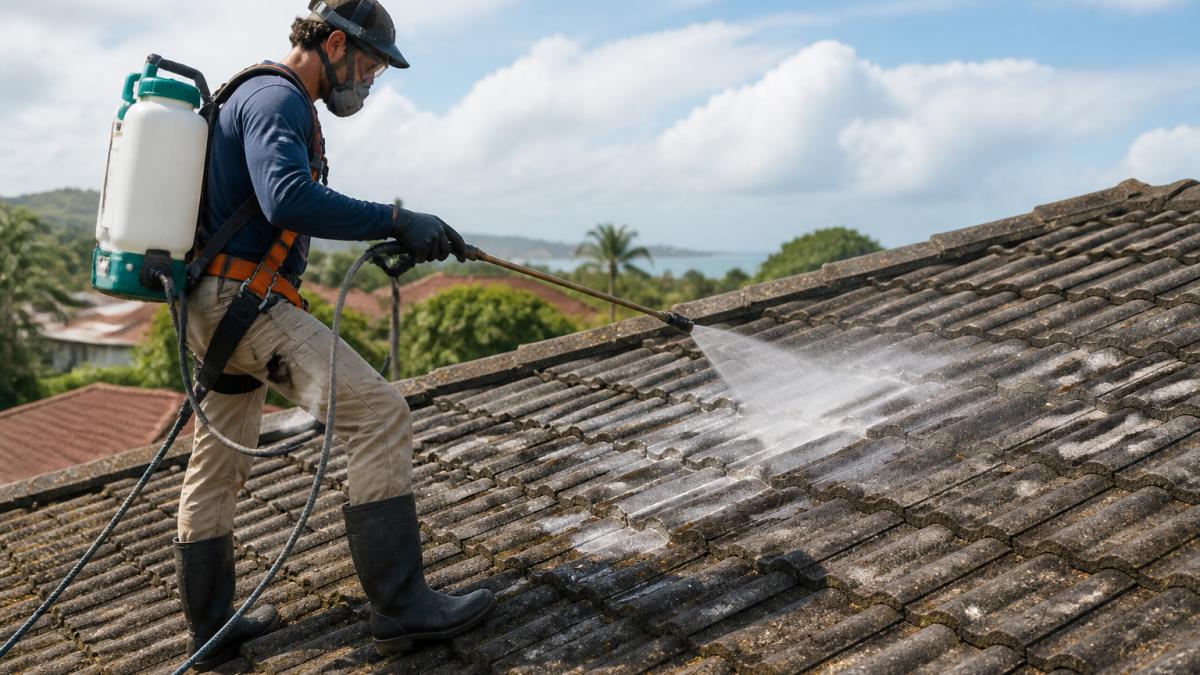
What you'll need:
- Safety harness and fall protection gear
- Protective equipment: gloves, goggles, non-slip boots
- Pump sprayer or soft wash system
- Biodegradable cleaning concentrate
Step 3: Cover plants and gutters. Wet gardens first, then cover them.
Step 5: Apply the treatment. Spray from the bottom up in small sections.
Step 6: Let it dwell. Give the solution time to kill the growth.
Step 7: Rinse gently. Use low pressure, top down.
Preventing Mould on Roof Tiles Long-Term
Preventing mould on roof tiles comes down to airflow, drainage, and regular checks. Below is a seasonal routine you can follow, plus post-cleaning steps that protect your gutters and garden.
Seasonal Monitoring Checklist
Tropical mould builds over weeks, so a five-minute check each season catches it before it becomes a restoration job.
Start of wet season (typically October-November in the tropics):
- Inspect the south and shaded faces for early green or black staining.
- Clear gutters and downpipes of leaf litter so water cannot pool at the roof edge.
- Trim any tree branches within a metre of the roof to improve airflow and sunlight.
- Check ridge caps and flashing for lifted or cracked sections that let water in.
End of wet season (typically March-April):
- Re-inspect the same faces. This is when regrowth is most visible.
- Rinse the roof with a garden hose to remove settled spores before they take hold.
- Spot-treat any new patches with a diluted soft wash mix rather than waiting for a full clean.
Dry season (May-September):
- This is the best window for a full soft wash if you need one, the roof dries fast and regrowth is slow.
- Check for cracked tiles or worn pointing that may have been damaged over the wet months.
- Re-apply a residual fungicide or inhibitor to high-risk faces if you used one previously.
Post-Cleaning Gutter and Garden Protection
This step is missing from almost every guide, yet it is where most DIY roof cleans cause collateral damage.
- Before you start: wet garden beds thoroughly. Dry soil and dry leaves absorb chemical runoff faster and burn more easily.
- Cover or divert: use plastic sheeting over sensitive plants, and place a bucket or diverter under the downpipe outlet to capture the first flush of runoff.
- During the job: rinse runoff away from garden beds and lawns as you work. Do not let it pool.
- After the job: flush gutters and downpipes with clean water. Dead mould, lichen, and chemical residue settle in the gutter and can block flow within weeks.
Material-Specific Maintenance
- Terracotta and concrete: These are porous, so they hold moisture. A residual treatment after cleaning slows regrowth. Avoid sealing unless the tiles are dry and the product is designed for porous surfaces.
- Glazed tiles: The glaze protects the tile, but once it wears or cracks, the tile underneath is vulnerable. Check for hairline cracks after each wet season.
- Colorbond and metal: Keep the coating intact. Touch up any scratches with a matching touch-up paint to prevent rust, which traps moisture and encourages growth.
When to Book a Professional Check
For long-term roof health, book a professional inspection every one to two years. A roof restorer can spot early regrowth, damaged pointing, and failing flashings a homeowner may miss from ground level, catching growth early is far cheaper than a full restoration or repairing water damage inside the home.
If your roof is over 15 years old or has never been inspected, start with a professional assessment before any DIY cleaning, the risk of falls and tile damage is highest on older, brittle roofs.
Conclusion
Tropical mould will keep coming back if you only clean the surface. The real fix is killing the growth, protecting the tile, and keeping water moving off your roof.
That is exactly what we do at JetSet Power Washing. We use soft washing that is safe for tiles, Colorbond, and metal roofs, plus paint, render, and cladding.
Get started with JetSet Power Washing and a free quote to bring your roof back to clean, protected condition.
Frequently Asked Questions
How do I get mould off roof tiles?
Start by identifying the contaminant, then apply a suitable treatment. For tropical mould, a soft wash using a pump sprayer with a cleaning concentrate is safest for tiles. Wet the roof, apply the solution, let it dwell for 15-30 minutes, then rinse gently with low pressure. For stubborn patches, use manual scrubbing with a soft-bristled brush. Always wear protective equipment and a safety harness if working at height.
Is it safe to pressure wash roof tiles?
Pressure washing roof tiles is generally not safe. High-pressure water blasting can strip protective coatings, force water under tiles, and damage surface integrity, leading to leaks and structural issues. Instead, use soft washing with low pressure (under 500 psi) and appropriate cleaning solutions. For Colorbond or metal roofs, even lower pressure is needed. Always check the manufacturer's guidelines or hire a professional experienced with your tile type.
What kills black mould on roof tiles effectively?
A biocide or fungicide containing benzalkonium chloride or sodium hypochlorite effectively kills black mould spores. For a gentler option, a mix of distilled vinegar (acetic acid) and water can work on mild cases. Apply the solution, allow adequate dwell time (15-30 minutes), then rinse. For tropical mould, a surfactant helps the solution penetrate. Always follow product instructions and avoid mixing chemicals.
How do I prevent mould from returning to my roof?
Preventing mould on roof tiles involves regular maintenance. Trim overhanging branches to improve sunlight and airflow, clean gutters to prevent moisture retention, and apply a residual mould inhibitor after cleaning. Schedule professional roof inspections every 12-18 months. In tropical climates, consider a protective coating or bi-annual soft wash to keep spores from establishing. Promptly address any new growth to stop it spreading.