 How-to
How to Clean a Driveway for an Open House
Last Updated: November 21, 2026
Quick Summary
To clean driveway surfaces for an open house, treat oil and red dirt stains first, then pressure wash or scrub with a stiff broom and mild detergent two days before the event. Finish with a dry sweep only on the morning of the open house, since a damp driveway looks darker and creates a slip hazard.
- Treat oil stains before washing, or the pressure washer drives oil deeper into the concrete.
- Use a 25-degree nozzle on concrete and overlapping passes of about half a nozzle width.
- Pressure washing strips joint sand from pavers, so plan to re-sand once dry.
- Complete the main clean two days out so a rainy day does not force inspection-morning washing.
- On the morning of the open house, do a dry sweep only and never wash.
Table of Contents
- Why Your Driveway Sets the Tone for an Open House
- Choosing the Right Cleaning Method for Concrete, Pavers and Exposed Aggregate
- How to Remove Oil Stains from a Concrete Driveway Before Inspection Day
- How to Remove Red Dirt Stains from Driveway Pavers
- How to Clean a Driveway Without a Pressure Washer
- Pressure Washing Safely: Nozzles, Overlapping Passes and Surface Damage
- How Long Does a Driveway Take to Dry After Pressure Washing?
- Booking a Professional Driveway Clean Before Your Open House
- Frequently Asked Questions
Why Your Driveway Sets the Tone for an Open House
Buyers judge a home before they step inside. The driveway is the first big surface they see, and a stained, mossy one tells a story you don't want told, so a clean driveway matters from the first glance. A clean driveway is the fastest way to lift a home's first impression, and it's the surface buyers walk across to reach your front door. This guide shows you how to clean a driveway for an open house, from method choice to drying time.
The goal is simple: make the concrete look cared for. Buyers read grime as neglect, and they start bargaining before they're through the gate.
Choosing the Right Cleaning Method for Concrete, Pavers and Exposed Aggregate
Match the method to the surface, or you'll damage what you're trying to improve. Here's the quick version:
- Concrete: pressure washing works well; use a surface cleaner attachment for even passes
- Pavers: lower pressure, and re-sand joints afterwards
- Exposed aggregate: keep the nozzle moving; the exposed stones can loosen under a harsh blast
- Sealed surfaces: soft washing is safer than high pressure
Soft washing uses low pressure and a cleaning solution to lift dirt and organic growth. High pressure blasts it away. For tropical grime and moss, soft washing is usually the safer choice. You can read a fuller breakdown in our guide to soft washing versus high pressure cleaning.
How to Remove Oil Stains from a Concrete Driveway Before Inspection Day
Oil stains need treatment before you wash, not during. Skip this and you'll spread the stain across clean concrete.
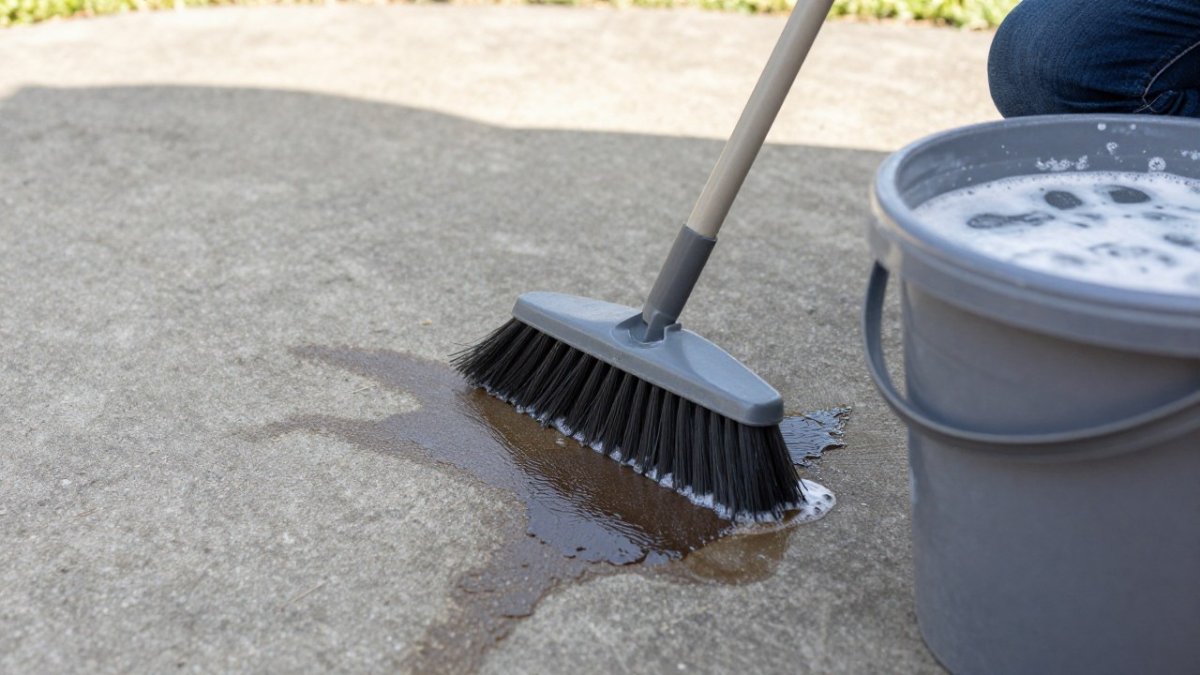
Follow these steps:
- Soak up fresh oil with kitty litter or sawdust, then sweep it up
- Scrub the stain with a stiff brush and a mild detergent
- For old stains, make a paste of baking soda and water, spread it on, and leave it overnight
- Rinse and repeat if the mark is still visible
A common mistake is reaching for the pressure washer first, which can drive oil deeper into the pores. Treat the stain first, then wash.
How to Remove Red Dirt Stains from Driveway Pavers
Red dirt is stubborn because the clay bonds to the paver surface. Plain water just moves it around.
Try this approach:
- Sweep off loose dirt first
- Apply a mild detergent and let it sit for a few minutes
- Scrub with a stiff outdoor broom, working in sections
- Rinse with a garden hose, not a blaster
- For set-in stains, a white vinegar and water mix can help lift the colour
Don't over-wet the joints. Excess water under pavers can loosen the bedding sand. If the red staining keeps coming back, the source may be runoff from a garden bed, so check where water flows after rain.
How to Clean a Driveway Without a Pressure Washer
No pressure washer? You can still get a driveway open-house ready with a hose, a broom and some patience. Here's the no-pressure-washer method:
- Sweep the whole driveway clear of leaves and grit
- Wet the surface with a garden hose
- Apply a mild detergent with a watering can or bucket
- Scrub in overlapping sections with a stiff outdoor broom
- Rinse from the top down
- Repeat on any stubborn patches
This method suits concrete, pavers and exposed aggregate, and it's gentle on older surfaces. It takes longer than pressure washing, so start a day or two before the inspection. Wear protective goggles if you're using any cleaning solution.
Pressure Washing Safely: Nozzles, Overlapping Passes and Surface Damage
Pressure washing is fast and effective, but the damage it causes is surface-specific, and that is where most generic guides stop short. The right technique for concrete is not the right technique for pavers, and the wrong nozzle on the wrong surface can cost more to repair than the clean was worth.
Start with nozzle choice. For concrete driveways, a 25-degree nozzle is the general-purpose tip and a 40-degree tip is the safer choice for older or sealed concrete. A 15-degree tip concentrates too much energy for most driveway work and should be reserved for spot treatment on sound, unsealed concrete.
On concrete, the main risks are etching and joint damage. Etching happens when the wand is held still or moved too slowly: the concrete paste is blasted away and leaves a rough, lighter line that no amount of re-washing will fix. Joints and control cuts are the weakest points, so keep the nozzle off them; water forced into a joint widens it and can undermine the slab edge.
On pavers, the risk is joint-sand loss and surface scuffing. Pressure washing strips the bedding sand out of the joints, which loosens the pavers and lets weeds and water in. Use the lowest pressure that still lifts dirt, keep the nozzle at a shallow angle rather than straight down, and plan to re-sand the joints once the surface is dry.
On exposed aggregate, the risk is loosening the stones. The exposed pebbles are held in a cement matrix, and a harsh, close blast can pop them free. Keep the nozzle moving, hold it further back than you would on plain concrete, and use a fan tip rather than a pencil jet. On sealed surfaces of any kind, soft washing is safer than high pressure because it lifts dirt without stripping the coating.
Watch out: avoid aiming the wand at painted surfaces, timber edging, garage doors, downpipes or the base of brickwork, as high pressure can strip paint and force water behind cladding.
How Long Does a Driveway Take to Dry After Pressure Washing?
Drying time is the part of open-house prep most homeowners get wrong, because they clean too late and then panic when visitors arrive to a slick, dark surface. Drying depends on surface type, sun exposure, airflow and humidity. Drying time depends on sun exposure, airflow and humidity, and shaded or sealed surfaces typically take longer to dry than surfaces exposed to sun and breeze. Exposed aggregate holds water in its pits and often reads as 'wet' long after the surface is safe to walk on.
A practical open-house timeline looks like this:
- Three to four days out: inspect the driveway in daylight, note oil, rust, moss and red-dirt patches, and treat stains. Stain treatments need dwell time, so doing them early stops you from rushing the wash.
- Two days out: complete the main clean (pressure wash or manual method). This buffer absorbs a rainy day without forcing you to wash on inspection morning.
- One day out: check for missed patches, sweep edges and blow or sweep debris off paths and gutters. If rain is forecast, this is your contingency day.
- Morning of the open house: do a dry sweep only. Do not wash. A damp driveway looks darker, shows tyre marks and footprint smears, and creates a slip hazard at the exact moment buyers are walking in.
Weather contingencies matter more than most guides admit. If rain is forecast within 24 hours of the inspection, wash earlier rather than later, because rain on freshly washed concrete can carry loosened dirt back across the surface and leave tide marks. If the forecast is for humid, still weather, allow an extra half-day and consider using a leaf blower on a low setting to push standing water off the surface and out of joints. Never use a high-pressure nozzle to 'speed up' drying; it drives water into cracks and joint sand.
Watch out: a driveway that looks dry can still be damp in shaded sections and under parked cars. Walk the full surface in bare or soft-soled shoes before deciding it is ready, and move any bins or trailers off the concrete at least a day ahead so those patches can dry too.
For visitor safety, keep the hose coiled and out of the walking path, and do not leave buckets or pressure-washer wands near the entrance. If you have used detergent, rinse runoff away from garden beds and lawn edges so plants are not soaked, and check that water is not pooling on the footpath where guests will step out of their cars.
Here is the open-house timeline the article recommends for driveway cleaning.
| Timing | What to do |
|---|---|
| Three to four days out | Inspect driveway, note stains, treat oil, rust, moss and red dirt |
| Two days out | Complete the main clean, pressure wash or manual method |
| One day out | Check missed patches, sweep edges, clear debris from paths and gutters |
| Morning of the open house | Dry sweep only, do not wash |
Booking a Professional Driveway Clean Before Your Open House
If the stains are stubborn, the driveway is large, or you're short on time, hiring a professional is the safer call. A pro brings trade-grade equipment and knows which method suits each surface.
At JetSet Power Washing, we offer free on-site quotes and respond the same business day. You get a fixed price in writing, so there are no surprises. We've been cleaning driveways across the region for over 5 years, and we're fully insured. Our soft washing is safe for paint, render and cladding, and we clean oil, moss, dirt and tyre marks.
Ready to book? Visit our driveway cleaning service page to see what's covered, or read our step-by-step booking guide if you want to know how the process works. You can also learn how to request a free pressure washing quote and compare options before you commit.
Your driveway is the first thing buyers see, and you don't get a second chance at a first impression. If you'd rather hand the job to a team that does this every week, JetSet Power Washing is ready. We offer free on-site quotes, a same-business-day response, trade-grade equipment and a fixed price in writing. Get started with JetSet Power Washing and put your best surface forward on inspection day.
Frequently Asked Questions
How do you clean a driveway before an open house?
Start by clearing the driveway and pre-treating oil or red dirt stains with a mild detergent or white vinegar. For concrete, use a pressure washer with a surface cleaner attachment and overlapping passes; for pavers, use a lower pressure setting. Finish with a garden hose rinse and allow 24 to 48 hours to dry before the inspection. Prioritise visible areas like the walkway and garage apron for curb appeal.
What is the best way to remove oil stains from a driveway?
For fresh oil stains, blot up excess oil, then cover the stain with baking soda or cat litter to absorb residue. Scrub with a stiff brush and a mild detergent solution, then rinse. For older, set-in stains, apply a commercial degreaser or a paste of baking soda and water, let it sit for 15 to 30 minutes, and scrub before rinsing. Pressure washing can help lift remaining residue on concrete.
Can you clean a driveway without a pressure washer?
Yes. A stiff outdoor broom, a garden hose, and a mild detergent can remove dirt, grime, and light moss. For red dirt stains on pavers, pre-treat with a white vinegar solution and scrub before rinsing. This manual method is slower but safe for delicate surfaces and avoids any risk of surface damage from high water pressure.
How long does a driveway take to dry after pressure washing?
Most driveways dry within 24 to 48 hours after pressure washing, depending on the material, weather, and humidity. Concrete and pavers may dry faster in sunny, windy conditions, while shaded or humid areas take longer. Avoid walking or driving on the surface until fully dry, and schedule cleaning at least two days before your open house to prevent slip hazards for visitors.