 how-to
Book Professional Driveway Cleaning: A Step-by-Step Guide
Table of Contents
- Why Professional Driveway Cleaning Matters
- How to Remove Red Dirt Stains from Driveway Pavers
- Pressure Cleaning vs Soft Washing for Concrete
- Understanding the Cost of Driveway Pressure Cleaning
- Step-by-Step: How to Book Your Service
- What to Expect on Cleaning Day
- Maintenance Tips After Professional Cleaning
- Frequently Asked Questions
Last Updated: September 23, 2026
Why Professional Driveway Cleaning Matters
Your driveway is the first thing visitors see. When it's covered in red dirt, oil stains, or tropical mould, it sends the wrong message about your property. A clean driveway transforms curb appeal instantly.
In tropical climates, algae and mould embed into concrete and pavers. Pressure washing alone risks damage to render, paint, or delicate surfaces, making the right cleaning method critical.
Professional driveway cleaning removes accumulated grime and protects your investment. JetSet Power Washing specializes in tailored approaches, soft washing for sensitive surfaces and high-pressure techniques for stubborn stains, ensuring results without compromise.
How to Remove Red Dirt Stains from Driveway Pavers
Red dirt stains, caused by iron oxide in tropical soil, are common and can look permanent without proper treatment.
Red dirt requires chemical treatment followed by rinsing. High pressure alone won't break down the mineral bonds. Professional driveway cleaning uses pH-balanced agents that dissolve the stain at the molecular level.
For pavers, soft washing applies cleaning solution at low pressure, allowing chemistry to work without risking grout loss or surface damage. The stain lifts away rather than being forced away.
Pressure Cleaning vs Soft Washing for Concrete
Choosing the wrong cleaning method can damage your property.
High-pressure washing uses water jets at 3,000-4,000 PSI and effectively removes heavy buildup from concrete. Risks include etching concrete, blasting render, stripping paint, and forcing water into cracks.
Soft washing applies cleaning solution at low pressure (under 500 PSI) and relies on chemistry rather than force. It's safer for painted surfaces, rendered walls, tiles, and delicate finishes.
For concrete driveways, the choice depends on surface condition and age. Rendered driveways and metal roofs require soft washing to avoid damage.
Understanding the Cost of Driveway Pressure Cleaning
Understanding what affects pricing helps you evaluate quotes fairly.
What drives professional driveway cleaning costs
Several factors determine the final price:
- Driveway size and surface area. Small driveways (20-30 m²) cost less than large ones (50+ m²). Most professionals charge per square metre, varying by cleaning method.
- Surface material. Concrete, pavers, bitumen, and aggregate require different techniques. Pavers cost more due to soft washing requirements; bitumen requires gentler pressure.
- Stain type and severity. Light dirt costs less than years of accumulated oil, rust, or mould. Stubborn stains require chemical treatment and multiple passes.
- Cleaning method. High-pressure washing is faster and cheaper than soft washing. Chemical treatment adds cost but is often essential for tropical staining.
- Site access and obstacles. Tight gate access, parked vehicles, or nearby plants increase setup time and complexity.
Typical pricing structure
Pricing depends on the specific requirements of the job.
Why cheap quotes are a red flag
A quote significantly below what others offer may signal shortcuts. It's always wise to compare what's included and check reviews.
Fixed pricing protects you
A reputable service provides a fixed price in writing after on-site assessment, specifying the cleaning method, areas, total cost, and date. If additional work is discovered, they contact you first before proceeding.
Phone quotes without a site visit are unreliable. Always insist on an on-site assessment.
Step-by-Step: How to Book Your Service
Booking professional driveway cleaning should be straightforward. Here's how the process works with a reliable provider.
Step 1: Get a Free On-Site Quote
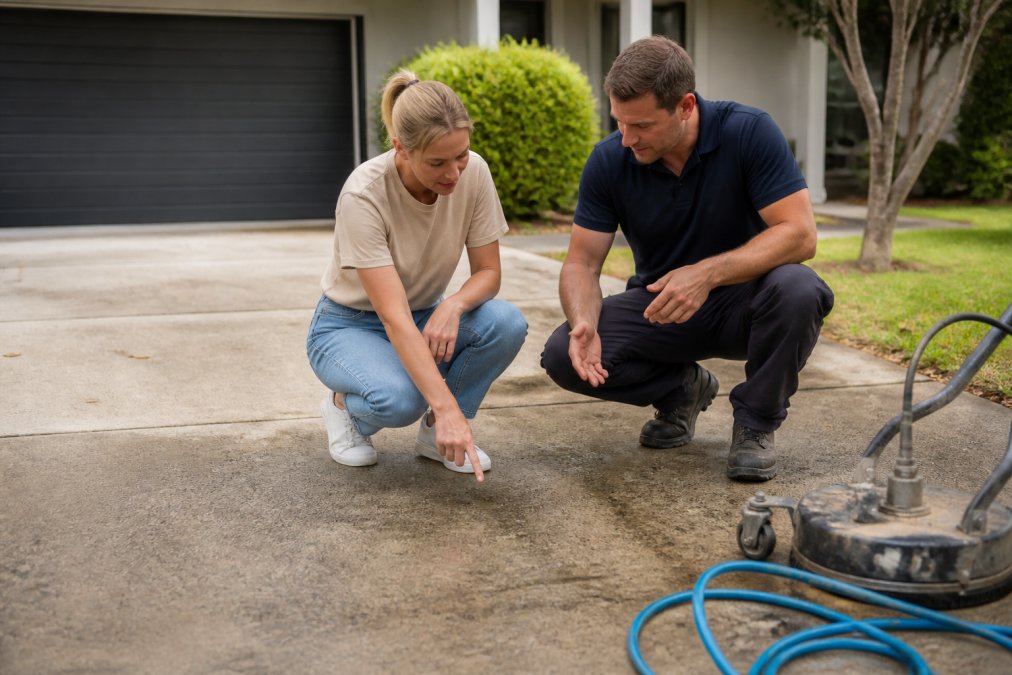
Request a free on-site quote. A professional visits to assess the driveway's condition, surface type, staining severity, and risk factors. They'll identify the best cleaning method and provide a detailed quote.
Step 2: Confirm Your Fixed Price in Writing
Get the price and scope in writing, specifying the cleaning method, areas, fixed total price, date and time, weather contingencies, and guarantees. A fixed price protects you from unexpected charges.
Step 3: Schedule Your Appointment
Choose a date and time that suits your schedule. Scheduling is flexible to suit your needs. Confirm the appointment in writing, including any special access instructions (gate codes, parking notes, pet management).
Ask about preparation. Do you need to move vehicles or park elsewhere?
What to Expect on Cleaning Day
Knowing what happens during the cleaning process reduces anxiety and helps you prepare.
Maintenance Tips After Professional Cleaning
Your newly cleaned driveway won't stay pristine without maintenance tailored to tropical conditions. Far North Queensland's high humidity, intense rainfall, and year-round warmth create an environment where mould, algae, and staining return faster than in other regions. Understanding the seasonal patterns and taking preventative action keeps your driveway cleaner longer and reduces the need for expensive professional intervention.
Tropical climate maintenance cycles
- Wet season (November to April). This is when mould and algae thrive. High humidity, frequent rain, and warm temperatures create ideal conditions for biological growth. During this period, inspect your driveway every 2-3 weeks. If you notice early signs of green or black discolouration (algae or mould), address it immediately with a light pressure rinse or soft brush. Early intervention prevents spores from embedding into the surface.
- Dry season (May to October). Lower humidity slows mould growth, but UV exposure intensifies. The sun breaks down protective sealers faster in tropical climates than elsewhere. This is the ideal time to apply or reapply a protective sealer if your professional recommends it. Dry conditions mean the sealer cures properly and lasts longer.
Monthly and seasonal maintenance tasks
Every 2-4 weeks (year-round):
- Sweep the driveway to remove loose dirt, leaves, and debris. This prevents organic matter from accumulating and feeding mould growth.
- Rinse with a standard garden hose at low pressure, especially after rain. This removes algae spores before they establish. You don't need professional equipment, a hose is sufficient for prevention.
- Check for new stains or discolouration. Fresh oil spills, rust marks, or mould patches are easier to treat early than after they've set for weeks.
Every 3 months (or at season changes):
- Inspect the driveway surface for cracks, damage, or areas where water pools. Standing water in tropical climates becomes a mould breeding ground within days.
- If you notice mould returning despite regular rinsing, apply a mould-inhibiting treatment. Many hardware stores stock eco-friendly, biodegradable options suitable for tropical properties with sensitive nearby ecosystems. Follow product instructions carefully.
- Check the condition of any protective sealer. If water no longer beads on the surface, the sealer is wearing and should be reapplied.
Annually (ideally at the start of the dry season):
- Schedule a professional clean. In tropical climates, annual professional cleaning is standard practice, not optional. The combination of humidity, rainfall, and biological growth means annual maintenance is more cost-effective than waiting 18-24 months and facing deeply embedded stains.
- Have the professional assess whether resealing is needed. Tropical UV exposure degrades sealers faster than in cooler regions; most properties need resealing every 2-3 years rather than every 3-5 years.
Address spills and stains immediately
Protective sealing in tropical conditions
- UV exposure. Intense tropical sun can degrade sealer polymers.
- Moisture and humidity. High humidity can affect sealer curing if applied during the wet season.
- Biodegradable and eco-friendly options. Choosing environmentally responsible sealers is important in sensitive ecosystems.
Mould prevention in high-humidity periods
- Ensure water drains away from the driveway. Pooling water creates mould hotspots. If your driveway slopes toward a low point where water collects, consider minor grading adjustments or installing a small drain.
- Trim overhanging trees and vegetation. Shade and moisture from nearby plants accelerate mould growth. Improving air circulation over the driveway reduces humidity and slows biological growth.
- Avoid watering gardens directly over the driveway during wet season. The extra moisture feeds mould. Water gardens in early morning or evening, and direct water away from paved areas.
- If mould returns within weeks of professional cleaning despite these measures, the underlying cause may be poor drainage, excessive shade, or high water table. Discuss this with your professional; they may recommend additional interventions like sealing, improved drainage, or more frequent cleaning cycles.
Frequently Asked Questions
What's the actual cost of professional driveway pressure cleaning?
Pricing depends on driveway size, stain severity, surface type, and whether soft washing or high-pressure cleaning is needed. Oil stains and red dirt removal typically cost more than general grime removal. Contact JetSet Power Washing for a free on-site quote, you'll receive a fixed price in writing before work begins, with no hidden costs or surprise charges once the job is complete.
Can soft washing actually remove stubborn oil and red dirt stains?
Soft washing uses specialised chemical treatments combined with low-pressure application, making it highly effective for stubborn stains without damaging surfaces. For deep-set oil and red dirt on pavers, professionals often combine soft wash treatments with targeted pressure cleaning on hardy concrete sections. The right approach depends on your surface type, JetSet assesses this during the free quote to recommend the best method for your specific stains.
How quickly will I see results after professional driveway cleaning?
Results are visible immediately after the cleaning is complete. Your driveway will look dramatically refreshed, with stains removed and the surface restored. For property sales or inspections, professional cleaning typically makes a significant visual difference that improves curb appeal and buyer perception. Most properties show results within the same business day of service completion.
Will professional pressure cleaning damage my render or Colorbond roof?
Professional teams use soft washing for delicate surfaces like render, paint, and cladding, which applies low-pressure chemical treatment instead of high-force water jets. For metal roofs and Colorbond, specialists use safe, pressure-controlled methods that clean effectively without denting or damaging panels. JetSet's trade-grade equipment and 5+ years of experience ensure surfaces stay protected, this is discussed in detail during your free on-site quote.