 How-to
How to Safely Clean Colorbond Roof: A Step-by-Step Guide
Table of Contents
- Why Safe Cleaning Matters for Colorbond Roofs
- What You'll Need Before Starting
- Colorbond Roof Cleaning Products: Choosing the Right Solution
- Cleaning Moss Off a Colorbond Roof: Step-by-Step Process
- Pressure Washing a Colorbond Roof: Risks and Safe Settings
- Colorbond Roof Maintenance: Preventing Future Build-Up
- When to Call a Professional Cleaner
- Common Mistakes to Avoid
- Frequently Asked Questions
Last Updated: October 12, 2026
Why Safe Cleaning Matters for Colorbond Roofs
Colorbond roofs are tough. They're also vulnerable in ways most homeowners don't realise. A single mistake with pressure or the wrong chemical can strip the protective coating, leaving bare steel exposed to rust and corrosion.
Cracks in the coating. Water damage inside walls. Panels that need full replacement. The good news: none of it is necessary.
To safely clean colorbond roof surfaces isn't complicated. It requires three things: the right approach, the right tools, and respect for working at height.
What You'll Need Before Starting
Safety equipment and fall protection
Working on a roof means working at height. That's the biggest risk, and it's non-negotiable.
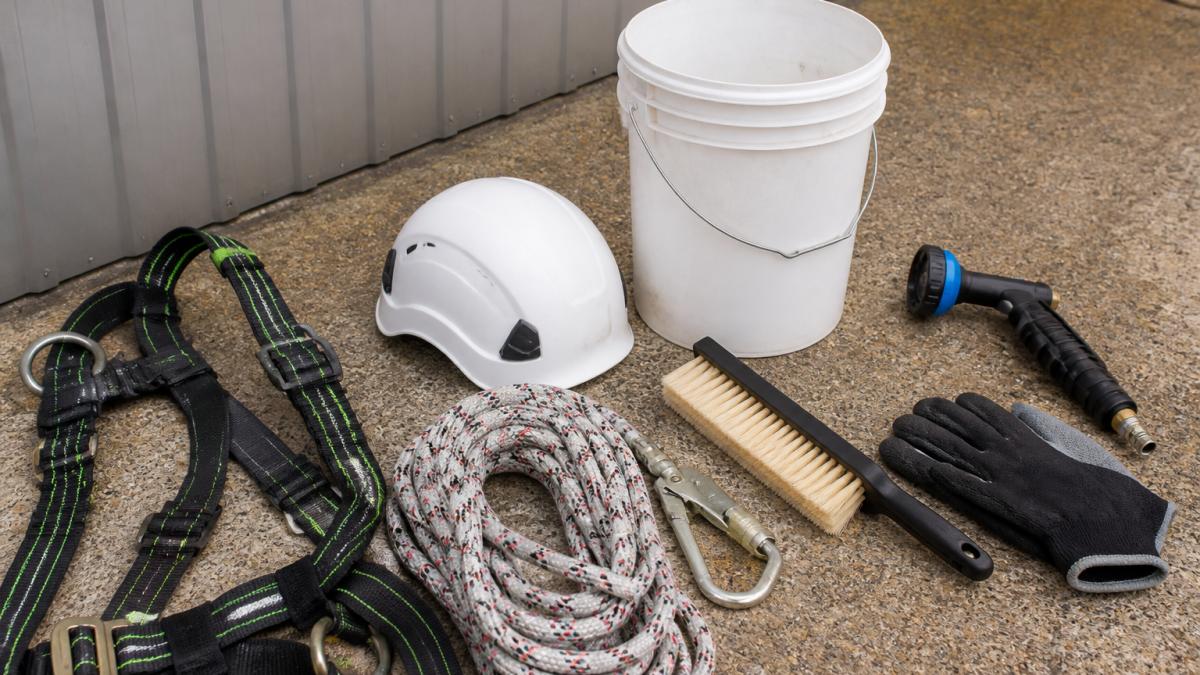
You need a proper harness, not a rope tied around your waist. You need an anchor point that won't fail. You need a helmet.
Essential safety gear:
- Harness: Full-body harness rated for fall arrest, not a simple waist belt
- Anchor point: Certified roof anchor or ridge hook bolted to solid structure
- Helmet: Hard hat or climbing helmet to protect your head
- Non-slip footwear: Shoes with grip. Wet Colorbond is slippery
- Gloves: Nitrile or rubber, to protect hands from chemicals and sharp edges
- Eye protection: Goggles to keep spray out of your eyes
Working at height on a sloped roof requires balance and awareness. If you're uncomfortable with heights, have mobility issues, or lack proper equipment, professional cleaning is worth the cost.
Cleaning tools and materials
The right tools make the job faster and safer. The wrong ones cause damage.
Soft-bristle brushes are your friend. Stiff wire brushes scratch the coating. Pressure washers, even on low settings, can force water under the coating and cause delamination. Low-pressure rinsing with a hose is your baseline.
What you'll actually use:
- Soft-bristle brush: Long-handled, with bristles that won't scratch paint
- Garden hose: Standard pressure (not a high-pressure washer yet)
- Bucket: For mixing cleaning solution
- Spray bottle or pump sprayer: For applying treatment to moss or mould
- Mild detergent: Dish soap or purpose-built roof cleaner
- Biocide treatment: For stubborn organic growth (optional, depending on what you find)
- Safety rope: Secondary safety line, separate from your harness anchor
- Ladder: Sturdy, placed on level ground to access the roof safely
Avoid pressure washers above 1,500 PSI for Colorbond. Even then, keep the nozzle at least 1 metre away and use a wide spray pattern. Better yet, skip the pressure washer entirely for the first pass.
Colorbond Roof Cleaning Products: Choosing the Right Solution
Mild detergent and warm water
This is your first line of attack. It works for light dirt, dust, and early-stage algae.
Mix warm water with a small amount of mild dish detergent, roughly one part detergent to ten parts water.
Apply the solution with a soft-bristle brush or pump sprayer. Let it sit for 10-15 minutes. This dwell time lets the detergent break down oils and loosen dirt.
Why mild detergent works:
- Breaks down oils and grime without harsh chemicals
- Won't strip the protective coating
- Safe for the environment and nearby plants
- Inexpensive and readily available
For light cleaning jobs, dust, bird droppings, light algae staining, this is often enough. The key is patience. Let the solution work.
Biocide treatments for organic growth
Moss, mould, and lichen are organic growth. They feed on moisture and thrive in tropical climates. Warm water and detergent alone won't kill them permanently.
Biocides stop spores from germinating. Common active ingredients include sodium hypochlorite (bleach) or quaternary ammonium compounds. These kill the organism, but you still need to rinse thoroughly to remove dead material.
When to use biocide:
- Visible moss or lichen on the roof surface
- Black or green mould staining
- Growth that returns quickly after cleaning
- Damp, shaded areas prone to organic growth
Apply biocide solution according to product instructions. Dwell time varies, typically 15-30 minutes. Rinse thoroughly with low-pressure water. Never leave biocide on the roof; residue can damage the coating.
Cleaning Moss Off a Colorbond Roof: Step-by-Step Process
Inspect and prepare the roof surface
Before you climb, assess what you're dealing with. Walk around the house and look at the roof from the ground.
Where is the moss? Which areas are wet or shaded? Are there gutters full of debris? Is the roof structurally sound?
This inspection tells you what cleaning approach to use and whether you can safely work on this roof.
Pre-cleaning steps:
- Clear gutters and downpipes of debris
- Remove loose moss by hand (if safely accessible from ground)
- Identify areas with heavy organic growth
- Check for structural damage or weak spots
- Ensure your safety equipment is in place and tested
If you find rust, deep dents, or areas where the coating is already failing, stop. These need professional assessment or repair before cleaning.
Apply treatment and allow dwell time
Once you're safely on the roof, start with the mildest approach.
Apply warm water and mild detergent solution to a small test area. Let it sit for 10-15 minutes. Check the result. If the moss is loosening, continue with this method.
Apply biocide according to the product instructions. Most require 15-30 minutes of dwell time. Don't rush this step. The longer the treatment sits, the more effective it is.
Treatment sequence:
- Start with warm water and detergent
- Wait 15 minutes and assess
- If moss persists, apply biocide treatment
- Wait 15-30 minutes (check product label)
- Rinse gently with low-pressure water
- Repeat on remaining areas as needed
Dwell time is critical. Pressure and scrubbing won't compensate for skipping it. Chemical cleaning works through time, not force.
Rinse gently with low-pressure water
Rinsing is where most damage happens. High pressure forces water under the coating and causes delamination.
Use your garden hose on normal pressure. Point the nozzle downward at a shallow angle, working from the top of the roof toward the gutters. Let gravity help. Don't spray upward or directly at seams and overlaps.
Rinsing best practices:
- Use garden hose pressure only (typically 40-60 PSI)
- Spray downward, following the roof slope
- Avoid seams, ridges, and overlaps where water can pool
- Rinse until all treatment residue is gone
- Check that gutters drain freely
After rinsing, let the roof dry for at least 24 hours before assessing results. Wet Colorbond looks darker and makes it hard to see what's actually clean.
Pressure Washing a Colorbond Roof: Risks and Safe Settings
Pressure washers are tempting. They're fast. They feel powerful. They also cause most of the damage we see.
Water at high pressure doesn't just clean, it forces its way under the paint coating. It finds seams and overlaps.
If you must use a pressure washer:
- Maximum pressure: 1,500 PSI
- Nozzle distance: at least 1 metre from the roof surface
- Spray pattern: wide, never concentrated
- Angle: downward only, never upward or horizontal
- Duration: brief passes only, never dwelling in one spot
Even at these settings, pressure washing carries risk. A 1,500 PSI washer at 1 metre distance is still aggressive.
Why low-pressure is better:
- Protects the coating from breaching
- Prevents water from forcing under seams
- Reduces risk of panel deformation
- Safer for the operator (less kickback, better control)
- Allows time for chemical treatments to work
For moss and organic growth, low-pressure rinsing with chemical treatment works just as well as pressure washing, without the risk.
Colorbond Roof Maintenance: Preventing Future Build-Up
Cleaning is temporary. Maintenance is permanent.
Moss and mould return because the conditions that created them haven't changed. Shade, moisture, and organic matter still exist. The roof is still a perfect growing medium.
Break the cycle:
- Trim overhanging branches: More sunlight means less moss
- Clear gutters regularly: Standing water feeds growth
- Improve drainage: Ensure water flows freely off the roof
- Reduce moisture: Improve roof ventilation if possible
- Apply preventative treatment: Some biocides offer residual protection
Regular inspection matters too. Catch small problems before they become big ones. Inspect your roof twice a year, spring and autumn, or after heavy storms.
Maintenance frequency depends on your climate and roof exposure:
- Shaded roofs in high-rainfall areas: inspect every 3-6 months
- Exposed roofs with good drainage: inspect annually
- After visible organic growth appears: treat within 1-2 weeks
Most homeowners can handle basic maintenance. Annual inspection plus clearing gutters prevents 80% of roof problems. When heavy moss or mould returns, that's the signal to call a professional.
When to Call a Professional Cleaner
DIY roof cleaning works for light maintenance. It doesn't work for everything.
Call a professional when:
- You're uncomfortable working at height
- The roof has heavy moss, mould, or lichen covering more than 30% of the surface
- You lack proper fall protection equipment
- The roof is steep, slippery, or structurally compromised
- Previous cleaning attempts have caused damage
- You're preparing the property for sale and need guaranteed results
Professional cleaners like JetSet Power Washing know how to safely clean colorbond roof surfaces with trade-grade equipment, proper safety training, and insurance. We also know which methods work for Colorbond without causing damage.
JetSet Power Washing specialises in safe cleaning for Colorbond and metal roofs. We use soft-washing methods designed to protect the coating while removing moss, mould, and dirt. We handle all the safety work, you get results without the risk.
Common Mistakes to Avoid
Mistake 1: High-pressure cleaning on the first pass.
Many homeowners assume pressure is the answer. It's not. Start soft and increase gradually.
Mistake 2: Skipping the dwell time.
Chemicals work through time. Rushing to rinse means wasting the treatment. Let it sit.
Mistake 3: Mixing chemicals without checking compatibility.
Bleach plus ammonia creates toxic fumes. Mixing two different biocides can create unpredictable reactions.
Mistake 4: Cleaning in direct sunlight.
Solution dries too fast. Chemicals don't have time to work.
Mistake 5: Ignoring gutters and downpipes.
Clogged gutters trap moisture and accelerate moss growth.
Mistake 6: Spraying upward or horizontally.
Gravity is your friend. Spray downward, letting water flow naturally toward gutters.
Mistake 7: Not wearing proper safety gear.
A fall from a roof is life-changing. Harness, helmet, non-slip shoes, every time. No shortcuts.
Frequently Asked Questions
Can you pressure wash a Colorbond roof?
High-pressure washing can damage Colorbond coatings and create micro-cracks that trap moisture, leading to rust and corrosion. Only use low-pressure rinsing (below 80 bar) after applying a cleaning solution. Most Colorbond roofs are best cleaned with soft washing: apply a mild detergent treatment, let it work for 15-20 minutes, then rinse gently with low-pressure water. Professional cleaners use equipment specifically calibrated for metal roofs to avoid this risk.
How often should you clean a Colorbond roof?
In tropical climates with high humidity and rainfall, inspect your Colorbond roof every 6-12 months. Clean it when you notice moss, mould, lichen, or black stains forming. Most homeowners find annual or biennial cleaning sufficient in humid regions. Regular maintenance prevents heavy organic growth from taking hold, which is harder to remove and may require professional intervention. Gutters should be cleared more frequently, typically every 3-6 months, to prevent leaf and debris accumulation.
What cleaning products are safe for Colorbond roofing?
Mild detergent mixed with warm water is the safest starting point for Colorbond roofs. Use a ratio of roughly 1 part detergent to 10 parts water. For stubborn moss, mould, or algae, a biocide treatment formulated for metal roofs is effective; check that it does not contain sodium hypochlorite at concentrations above 5%, as stronger solutions can bleach the coating. Always test any chemical on a hidden area first. Avoid acidic or abrasive cleaners, which can strip the protective paint layer.
What is the safest way to clean a roof?
The safest approach is soft washing: apply a gentle cleaning solution, allow dwell time for the product to break down organic growth, then rinse with low-pressure water. Always use fall protection when working at height, secure a harness to a roof anchor point and wear a helmet. Inspect the roof surface for loose sheets or damage before starting. Work during dry conditions, move slowly, and avoid standing directly over gutters or edges. If the roof is steep, wet, or you are uncomfortable at height, hire a professional with proper equipment and insurance.