 How-to
Why Curb Appeal Increases Home Appraisal Value
Last Updated: November 22, 2026
Quick Summary
Curb appeal increases home appraisal value indirectly, by supporting a better condition rating and shifting which recent comparable sales the valuer treats as truly comparable. Appraisers do not add a fixed curb appeal bonus; they adjust comparable sales for observable condition differences that market evidence supports.
- Fix visible condition problems like moss, stains and peeling paint before any decorative landscaping.
- Valuers rate condition on an ordinal scale such as average, good or excellent, not a numeric score.
- A clean driveway and entry change how a buyer reads the whole property on arrival.
- Percentage claims linking curb appeal to value mostly come from overseas buyer surveys, not Australian appraisal data.
- Book the exterior clean early so surfaces dry fully and touch-ups can be done.
Table of Contents
- How Appraisers Actually Assess Curb Appeal
- Appraisal Value vs Listing Price: Why the Two Diverge
- How to Prepare for a Home Appraisal with Exterior Upkeep
- Best Curb Appeal Improvements for Resale and Appraisal
- Driveway Cleaning and Property Value: What the Evidence Shows
- Pressure Washing Before Selling a House: Timing and Method
- Where Percentage Claims About Curb Appeal Fall Short
- Booking Your Pre-Appraisal Exterior Clean
- Frequently Asked Questions
How Appraisers Actually Assess Curb Appeal
Curb appeal is the overall visual impression a property makes from the street, and it affects an appraisal mainly through condition ratings and how the home compares with recent sales nearby.
An appraiser does not score kerb appeal with a beauty contest. They walk up the driveway and note condition. Peeling paint, stained render, moss on the roof and grime on the path all read as maintenance debt.
That matters because a home in poor condition gets compared with sales in similar condition, not with the freshly renovated house down the road.
Condition Ratings and Comparable Sales
Most residential appraisals in Australia follow the Australian Property Institute valuation standards and the lender's own instructions. The valuer inspects the property, rates its condition, then finds recent comparable sales and adjusts up or down for differences.
A clean, well-kept exterior supports the argument that the home sits at the better end of its condition band. It does not add a fixed amount. It shifts which sales the valuer treats as truly comparable.
What the Condition Rating Actually Captures
Valuers typically use a simple ordinal scale, often something like average, good, or excellent, rather than a numeric score. The rating is not a beauty score; it reflects observable maintenance and presentation.
The rating then feeds into the comparable sales analysis. If the valuer rates your home as "good" condition, they will look for recent sales of similar homes also rated "good", not sales of renovated or new homes, and not sales of run-down homes. Curb appeal improvements move your home into a better condition band, which changes the pool of comparable sales the valuer draws from.
How Adjustments to Comparable Sales Work
Once the valuer selects comparable sales, they adjust the sale price of each comparable up or down to reflect differences between that property and yours.
Watch out: appraisers do not add a fixed "curb appeal bonus." They adjust comparable sales for differences in condition, and the adjustment must be supported by market evidence. If you clean the driveway but the comparable sale down the street also has a clean driveway, there is no adjustment to make.
Why This Distinction Matters for Sellers
Understanding the mechanism helps you prioritise. Fixing visible condition problems, moss, stains, peeling paint, is more likely to affect the condition rating and the comparable sales analysis than decorative landscaping. A valuer who sees a well-maintained exterior has one less reason to mark the condition down, and that can shift which sales are treated as truly comparable. The effect is real but indirect, and it depends on your local market and the evidence your valuer uses.
Appraisal Value vs Listing Price: Why the Two Diverge
An appraisal is one valuer's opinion of market value for the lender. A listing price is what a seller hopes to get.
So a great-looking exterior can lift buyer interest and the final sale price without moving the appraisal by the same amount. The valuer is answering a narrower question: what would a willing buyer pay, based on evidence?
Think of it as three separate numbers:
- Appraised value: the valuer's evidence-based figure for the lender
- Listing price: the seller's asking number
- Sale price: what a buyer actually agrees to pay
Curb appeal influences all three, but through different mechanisms. It supports the condition rating for the appraisal, sets expectations at the listing stage, and drives competition during viewings.
How to Prepare for a Home Appraisal with Exterior Upkeep
Preparation for a home appraisal starts with fixing what a valuer will notice in the first two minutes: the driveway, the entry, the roof line and the walls. A full exterior clean from roof to driveway handles most of that in one visit.
Here is the practical order we recommend to sellers.
A Practical Pre-Appraisal Checklist
- Clear gutters, paths and the driveway of leaves, toys and bins
- Remove moss, mould and black streaking from roof and walls
- Wash oil stains and tyre marks from the driveway and garage apron
- Scrub the entry, front door and steps
- Tidy the garden beds and mow the lawn
- Touch up peeling paint on trim and fences
- Fix loose handles, broken tiles and sagging gates
- Put together a simple list of recent maintenance for the valuer
That last item is easy to skip and worth doing. A short written record of repairs and cleaning dates gives the valuer evidence to work with.
Best Curb Appeal Improvements for Resale and Appraisal
The best curb appeal improvements for resale are the ones that fix visible condition problems first, before anything decorative. Buyers and valuers both read a clean, sound exterior as a well-maintained home.
Ranked by likely appraisal relevance and effort:
| Improvement | Effort | Likely appraisal relevance |
|---|---|---|
| Exterior pressure or soft wash | Low | High, fixes visible condition |
| Driveway and path cleaning | Low | High, first thing seen |
| Garden tidy and lawn care | Low | Medium |
| Front door clean or repaint | Low | Medium |
| Gutter and roof debris clearing | Medium | Medium to high |
| Render repair and repaint | High | High |
Landscaping, a tidy entryway and fresh exterior finishes all help. But a tired, stained surface undoes the effect of a new garden bed faster than most sellers expect.
Driveway Cleaning and Property Value: What the Evidence Shows
Driveway cleaning supports property value by removing the marks buyers read as neglect: oil drips, moss in the joints, tyre marks and embedded dirt.
Percentage claims about kerb appeal and value are often drawn from overseas surveys rather than Australian appraisal data, so they should be read with caution.
What we can say with confidence is narrower and more useful. A clean driveway and entry change how a buyer reads the whole property on arrival.
If you want the longer explanation of how cleaning feeds into value, read our guide on whether exterior cleaning increases property value.
Pressure Washing Before Selling a House: Timing and Method
That leaves time for surfaces to dry fully and for any touch-ups the clean reveals.
Method matters more than most sellers realise. High pressure on the wrong surface causes damage that costs more than the clean saved.
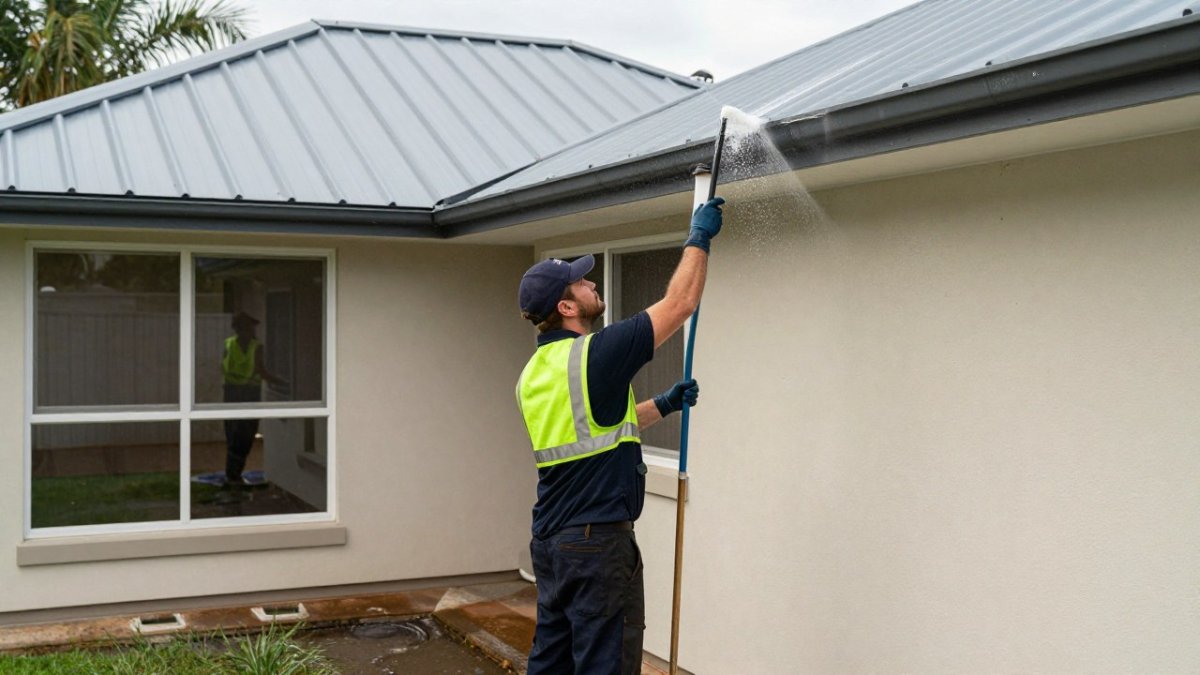
Soft washing uses low pressure and a cleaning solution to lift mould, algae and grime. It suits paint, render, cladding and Colorbond roofing.
Watch out: blasting a rendered wall or a Colorbond roof at full pressure can strip coatings, force water behind cladding and leave streaks that are expensive to fix. If you are unsure which method your home needs, our comparison of soft washing versus high pressure cleaning explains the difference.
Where Percentage Claims About Curb Appeal Fall Short
Be sceptical of tidy percentage figures linking kerb appeal to appraised value. Most trace back to overseas surveys of buyer opinion, not to Australian valuers adjusting comparable sales.
A survey asking buyers what they would pay is not the same as an appraisal. It measures stated preference, not settled market evidence. And a national average tells you nothing about your street.
The honest position is this: a clean, well-maintained exterior helps, and the size of the help depends on your local market, your home's condition band and the sales your valuer uses. Anyone quoting a precise figure for your house is guessing.
Why Overseas Surveys Do Not Transfer
Most of the big percentage claims about kerb appeal and value come from real estate surveys conducted in the United States or the United Kingdom. Those surveys ask buyers hypothetical questions, "how much more would you pay for a home with great curb appeal?", and report the average answer as a percentage. That methodology has three problems for Australian readers.
First, stated preference is not the same as market behaviour. Second, the surveys measure buyer perception, not appraiser judgement. Third, the surveys are national averages, and a national average tells you nothing about your suburb, your street, or your home's condition band.
What Credible Evidence Would Look Like
If you want to evaluate a claim about curb appeal and appraised value, ask three questions. What was measured, buyer opinion, sale price, or appraised value? Who was measured, a national sample, a local sample, or a single case study? And how was it measured, a survey, a controlled experiment, or an analysis of settled sales?
A credible claim about appraised value would need to show that appraisers in a defined market adjusted comparable sales for exterior condition differences, and that the adjustments were consistent enough to measure. That kind of evidence is rare in public marketing material. Most of what you see online is buyer-opinion survey data repackaged as appraisal fact.
The Practical Takeaway
You do not need a percentage to make a good decision. The mechanism is clear: a clean, well-maintained exterior supports a better condition rating, which shifts which comparable sales the valuer treats as truly comparable. That is a real effect, but it is indirect and local.
Watch out: if a service provider quotes a precise percentage increase in appraised value from cleaning or landscaping, ask them what study it comes from, where it was conducted, and whether it measured appraised value or buyer opinion. In most cases, the answer will show the figure does not apply to your situation.
Booking Your Pre-Appraisal Exterior Clean
Booking your pre-appraisal exterior clean is the one step that turns the advice above into a visible result before the valuer arrives.
JetSet Power Washing offers a free on-site quote and same-business-day responses, with a fixed price in writing.
If you are getting the driveway and entry sorted ahead of an appraisal, you can book driveway cleaning as a standalone job. Or contact us to arrange a time and ask any questions first.
A stained driveway and a mouldy roof line give a valuer a reason to mark your home down before they have opened the front door.
Frequently Asked Questions
Does curb appeal increase a home's appraised value?
It can, but indirectly. Appraisers assess exterior condition as part of the overall property assessment and weigh it against comparable sales in the area. A well-maintained exterior that presents as clean and sound supports a stronger condition rating, which feeds into the final figure. Curb appeal alone won't override weak comparables, but poor exterior condition can drag a valuation down. Treat it as one factor among several, not a guaranteed percentage lift.
How does an appraiser assess a home's exterior?
The appraiser walks the property and notes exterior appearance, condition and upkeep: roofing, cladding, paint, gutters, fencing, paving, landscaping and any visible defects like cracked render or moss growth. These observations inform the condition rating applied to the property, which is then weighed against comparable sales. Photographs and notes are typically recorded. Anything a buyer would notice on a home viewing is something the appraiser will notice too.
Which curb appeal improvements offer the best return?
Prioritise cleaning and repair before cosmetic upgrades. Exterior cleaning of driveways, paths, roofs and walls, fresh paint on the front door and trim, tidy garden maintenance and clear walkways address the issues appraisers and buyers notice first. Soft washing is safe for render, paint, Colorbond and tiled roofs, so it covers a lot of surface area for the effort. Larger renovations cost more and may not shift an appraisal much if the underlying condition is already sound.
Will pressure washing before selling a house actually make a difference?
It changes how the property reads in photos and at inspections, which affects buyer interest and, in a competitive market, the sale price. For appraisals, a clean exterior supports a well-maintained impression rather than adding a fixed dollar amount. Book a free on-site quote to confirm the right method for your surfaces.