 Listicle
Best Pressure Washing Services: 2026 Guide
Table of Contents
- What to Look for in Pressure Washing Services
- Pressure Washing Services: Key Differences Between Providers
- Driveway Pressure Cleaning: Methods and What Works
- Soft Washing for Delicate Surfaces
- Understanding Pressure Washing Cost and Getting a Quote
- How to Evaluate and Choose a Service Provider
- Frequently Asked Questions
Last Updated: October 17, 2026
What to Look for in Pressure Washing Services
Finding the right pressure washing services means knowing what separates a solid operator from one who'll damage your property.
The best pressure washing services balance power with precision: a concrete driveway handles high-pressure jets, but a painted fence or roof can't.
When evaluating pressure washing services, look for a free on-site quote rather than a phone estimate, detailed questions about your surfaces and property age, and a clear explanation of their method, high-pressure cleaning, soft washing, or a combination, before starting.
Insurance and reliability matter more than you'd think. A fully insured operator protects you if something goes wrong, same-business-day responses signal they're organised, and a fixed price in writing eliminates the surprise bill.
At JetSet Power Washing, we've built our reputation on these fundamentals: free on-site quotes, same-business-day responses, and transparent fixed pricing.
Pressure Washing Services: Key Differences Between Providers
Not all pressure washing services operate the same way. Many offer only high-pressure cleaning; the best also provide soft washing for delicate surfaces.
Equipment matters. Trade-grade pressure washers deliver consistent results efficiently, while consumer-grade gear often needs multiple passes, wasting time and money.
Method selection is where providers truly differ. High-pressure cleaning works brilliantly on concrete driveways, removing oil stains and embedded dirt, but damages painted timber or roof tiles.
Response time reveals a lot.
Pricing transparency separates trustworthy operators from those who surprise you with extra charges.
Experience matters too.
Driveway Pressure Cleaning: Methods and What Works
Your driveway is one of the most abused surfaces on your property, enduring vehicle weight, oil leaks, tyre marks, and years of dirt.
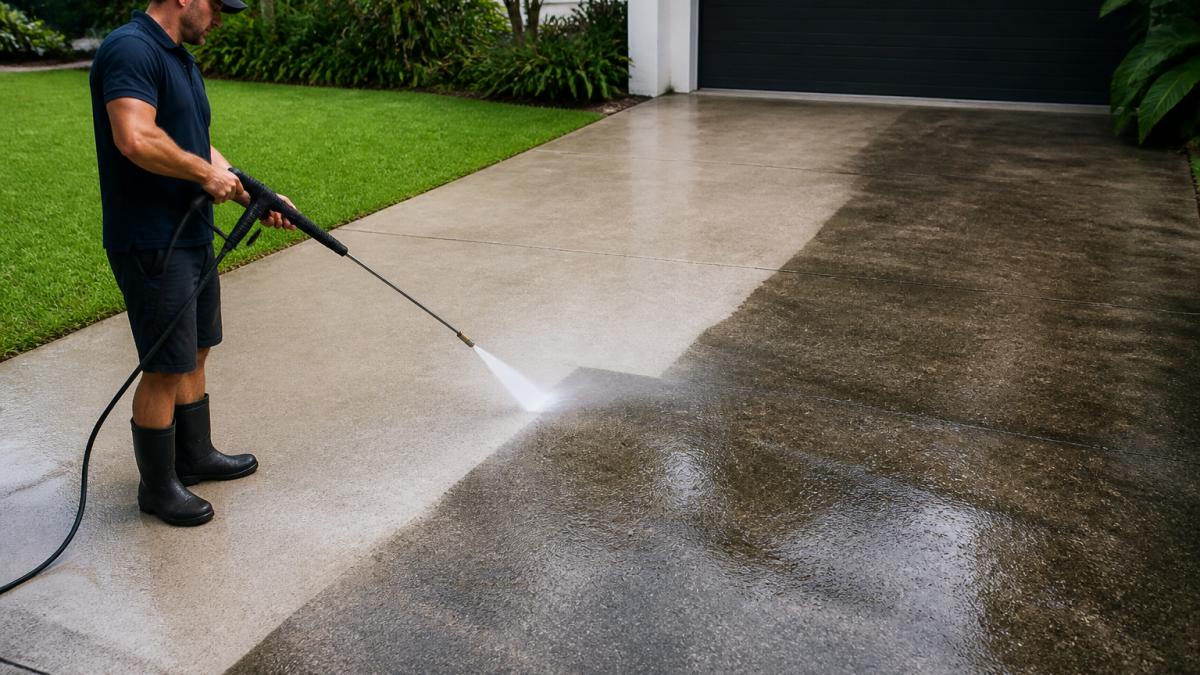
Concrete driveways respond well to high-pressure cleaning because the material is hard and non-porous.
Stubborn oil stains need a two-step approach: apply a degreasing solution and let it sit to break down the oil chemically, then rinse with high-pressure water.
Asphalt driveways need gentler treatment, high pressure can tear the surface and dislodge aggregate. Soft washing with appropriate cleaning solutions removes dirt and algae without structural damage.
A cleaned driveway instantly improves curb appeal and suggests a well-maintained home, while removing corrosive materials extends its lifespan.
Soft Washing for Delicate Surfaces
Soft washing combines low-pressure water with biodegradable cleaning solutions instead of relying on pressure alone. It's essential for surfaces high pressure would damage.
Painted timber fences, render, and cladding all benefit from soft washing.
Roof cleaning is where soft washing truly shines.
Soft washing solutions are biodegradable and safe for plants, pets, and waterways, breaking down organic growth chemically; a low-pressure rinse then removes the debris.
Soft washing takes longer than high-pressure cleaning, which is why some providers avoid it.
Understanding Pressure Washing Cost and Getting a Quote
Most pressure washing pages stop at "request a free quote" and never say what a job is likely to cost. The guidance below is indicative only, every operator prices differently, but it gives you a framework for reading a quote rather than guessing.
What actually drives the price
Surface area is the primary driver, but rarely priced in isolation. Most operators build a quote from four inputs:
- Measured area, usually the footprint of the surface plus edges, steps, and returns. A driveway quoted at 50 square metres may measure closer to 60 once borders and the apron are included.
- Surface type and method, high-pressure cleaning on concrete is fast; soft washing on render, painted timber, or Colorbond is slower because it involves chemical dwell time and a low-pressure rinse.
- Contamination level, light dust and pollen versus years of oil, mould, algae, and salt film. Heavy contamination usually means pre-treatment, longer dwell time, and sometimes a second pass.
- Access and height, ground-level surfaces are straightforward; roof work, multi-storey exteriors, and tight side access add labour, safety equipment, and sometimes a second operator.
Indicative price ranges (AUD)
| Job type | Typical indicative range (AUD) | Notes |
|---|---|---|
| Single driveway (approx. 40-60 m²), concrete | $150-$350 | Higher end if oil staining needs degreasing and a second pass |
| Double driveway or long driveway (approx. 80-120 m²) | $300-$600 | Price per square metre usually drops as area rises |
| Concrete paths, patios, and entertaining areas | $120-$300 | Often bundled with a driveway for a better combined rate |
| Single-storey house exterior wash (render, cladding, eaves) | $350-$800 | Soft washing and gutter-line mould removal push toward the upper end |
| Two-storey house exterior wash | $600-$1,200 | Height access and additional setup time are the main variables |
| Roof soft wash (single-storey, tiled or metal) | $450-$1,000 | Colorbond and tile both need low pressure; moss and heavy algae add cost |
| Timber or Colorbond fence (per 10 linear metres) | $80-$200 | Brightening or re-oiling is usually a separate line item |
| Small commercial frontage or shopfront | $250-$700 | After-hours access and runoff management can affect price |
Two practical rules of thumb: most operators have a minimum call-out so small jobs are worth bundling, and bundling multiple surfaces in one visit is the easiest way to reduce the per-job rate because travel and setup are shared.
Worked example: what a typical quote should show
A homeowner wants a double concrete driveway, front paths, and a single-storey rendered house washed. A well-structured quote shows:
- Driveway (approx. 90 m²), high-pressure clean with degreaser on oil spots, one line
- Paths and entry (approx. 25 m²), high-pressure clean, one line
- House exterior, soft wash including eaves and gutter line, one line
- Any pre-treatment, chemical, or second-pass allowance, stated separately or noted as included
- Total fixed price, GST treatment, and payment terms
If a quote arrives as a single number with no breakdown, ask for one before accepting, a good test of how the operator communicates.
Questions that change the number
- Water access, most operators use your outdoor tap; if water access is limited, they may need to bring a tank, which can add cost.
- Runoff and containment, washing near stormwater drains or on sensitive sites may require bunding or capture, particularly for commercial work.
- Preparation, moving vehicles, furniture, pot plants, and outdoor settings is usually your job unless agreed otherwise; if the operator moves them, expect it to be quoted.
- Timing, urgent or same-day work, weekend work, and after-hours commercial work often carry a premium.
- Re-treatment, if mould or algae returns quickly because of shade and humidity, ask whether a follow-up or a longer-lasting treatment is included or extra.
Red flags in a quote
- A phone estimate with no site inspection for anything beyond a small, simple job.
- No written scope, you should see which surfaces, which method, and what is excluded.
- No mention of insurance or licensing where required.
- A price far below what you might expect with no explanation; it often signals consumer-grade equipment, no pre-treatment, or a plan to upsell on the day.
A fair quote is specific, written, and fixed. If the operator cannot explain how they arrived at the number, keep looking.
How to Evaluate and Choose a Service Provider
Most guides tell you to check insurance and read reviews. That is table stakes. The checklist below separates a provider you can trust on your property from one you will regret hiring, and doubles as the questions to ask before you accept a quote.
The pre-hire checklist
Work through this before you book anyone:
- Insurance, ask for a certificate of currency for public liability cover. A legitimate operator will provide it without hesitation. If they cannot, walk away; you do not want to be liable for damage to your home or a neighbour's property.
- Written scope, the quote should name every surface, the method for each (high pressure versus soft wash), and what is excluded. "Wash house" is not a scope.
- Fixed price versus hourly, prefer a fixed price in writing. Hourly pricing is acceptable for genuinely unpredictable work, but it should come with an estimate range and a clear trigger for any variation.
- Method match, confirm the operator will soft wash render, painted timber, Colorbond, and roof tiles, and reserve high pressure for concrete and hard paving. If they propose high pressure on painted or coated surfaces, ask why.
- Water access and runoff, confirm whether they use your tap, whether they need a tank, and how they manage runoff, especially near stormwater drains, gardens, and neighbouring properties.
- Preparation and protection, ask who moves vehicles and furniture, how plants and outdoor settings are protected, and whether windows and doors are closed and covered.
- Chemical safety, ask what cleaning solutions are used, whether they are biodegradable, and how they are kept away from pets, fish ponds, and waterways.
- Reviews with detail, look for reviews that name the surface and the outcome (driveway, roof, render), not generic five-star praise. Ask for before-and-after photos of comparable jobs.
- Response and scheduling, a same-business-day response to your enquiry is a reasonable signal. Ask how far ahead they are booked and what happens if weather delays the job.
- Workmanship commitment, ask what happens if you are unhappy with the result. A confident operator will offer to return and address specific concerns.
Quote questions worth asking
Use these to compare providers on substance rather than price alone:
- Which surfaces will you soft wash, and which will you high-pressure clean?
- What pre-treatment do you use for oil, mould, and algae, and is it included?
- Is the price fixed, and what would cause it to change?
- Do you use my water, and how do you manage runoff?
- Are you insured, and can you send the certificate?
- Who moves vehicles, furniture, and pot plants?
- What is your availability, and how do you handle rain delays?
- Can you show before-and-after photos of a similar job?
- What is your minimum call-out, and does bundling surfaces reduce the rate?
Local considerations that affect the choice
In a tropical coastal climate, mould, algae, and salt film return faster than in drier regions, so frequency matters as much as method. Ask how often they recommend re-cleaning, a shaded, south-facing rendered wall may need attention far more often than a sun-exposed concrete driveway. Salt exposure and seasonal heavy rain also affect how quickly surfaces soil and how runoff is managed. A provider who can talk through these trade-offs is more useful than one who simply quotes a number.
Comparing value, not just price
A lower quote is not automatically better value. Weigh the written scope, method match, insurance, equipment quality, and willingness to explain their approach. The cheapest quote often becomes expensive once you factor in re-cleaning, damage repair, or a second contractor. The right provider is the one whose quote you can read, question, and hold them to.
Frequently Asked Questions
How do I know if a pressure washing service won't damage my render or paint?
Ask the provider about their method before booking. Reputable services distinguish between high-pressure cleaning for concrete and driveways, and soft washing for painted surfaces, render, and cladding. Request references for similar jobs, confirm they use adjustable pressure settings, and insist on a fixed-price quote in writing that specifies which surfaces receive which method. A reliable operator will discuss surface risks upfront and never commit to high-pressure work on delicate finishes.
What should I ask a pressure washing service before getting a quote?
Ask about their experience with your specific surfaces (Colorbond, tiles, render, or timber), whether they provide free on-site quotes, if their price is fixed in writing, and their response time for bookings. Confirm they are fully insured and can handle soft washing as well as high-pressure cleaning. Ask for before-and-after examples of similar jobs and clarify what cleaning solutions they use. A professional operator will answer all these questions without hesitation.
How much does professional pressure washing cost?
Pricing depends on the job scope, surface area, surface type, and complexity of stains or buildup. Driveway cleaning, roof washing, and building exteriors each have different pricing structures. Rather than estimate, request a free quote from your chosen provider. Many operators offer same-business-day responses and provide fixed prices in writing so there are no surprises. Requesting quotes from local services helps you understand pricing for your specific job.
Is soft washing better than pressure washing for my roof or painted surfaces?
Yes, for delicate surfaces. Soft washing uses low-pressure water and cleaning solutions to safely remove moss, mould, and algae from tiles, Colorbond, metal roofs, render, and painted cladding without risk of damage. High-pressure cleaning is reserved for concrete driveways, paths, and other hard surfaces where stains are stubborn. A professional service will assess your surfaces and recommend the right method, soft washing where needed, high-pressure where safe, rather than applying one method to everything.