 How-to
Removing Set-In Oil Driveway Stains: Step-by-Step
Table of Contents
- Assessing Your Oil Stain: Age, Surface Type, and Removal Strategy
- How to Remove Old Oil Stains from Concrete: The Absorption Method
- Best Driveway Oil Stain Remover: Detergent and Degreaser Application
- Pressure Washing Oil Stains from Driveway: Equipment and Safety
- Treating Stubborn Stains: Repeat Methods and Realistic Expectations
- When to Call a Professional
- Frequently Asked Questions
Last Updated: October 18, 2026
Assessing Your Oil Stain: Age, Surface Type, and Removal Strategy
Understanding the critical factors behind removing set-in oil driveway stains – how long the stain has been there and what your driveway is made of – determines which method will work. These details dictate the most effective approach.
Fresh versus Set-In Stains
A fresh oil spill sits on the surface and hasn't penetrated deep into the material yet. Set-in stains have soaked into the concrete, asphalt, or pavers over days, weeks, or months. This distinction is crucial because the removal approach changes significantly.
Fresh stains respond quickly to absorption. You catch them before they bond chemically to the surface. Set-in stains have already bonded, meaning absorption alone won't lift them.
The difference is measurable. Fresh spills take minutes to treat effectively. Old stains often need multiple treatments, and realistic expectations are essential.
Identifying Your Driveway Surface
Concrete, asphalt, pavers, and pebbled surfaces all absorb oil differently. Concrete is porous and holds oil deep within its structure. Asphalt is softer, allowing oil to sink into it faster. Pavers have joints where oil can pool. Pebbled surfaces trap oil between the stones.
Your surface type dictates appropriate pressure settings, scrubbing intensity, and which cleaning solutions will be most effective. Soft washing suits delicate surfaces. High-pressure rinsing works on tough concrete but risks damage to render or painted surfaces.
Match your surface to the right approach:
- Concrete: Tolerates higher pressure and aggressive scrubbing.
- Asphalt: Needs gentler pressure to avoid surface damage.
- Pavers: Requires careful attention to joints where oil collects.
- Pebbled surfaces: Benefit from pre-treatment before pressure washing.
At JetSet Power Washing, we assess surface type first because it dictates every subsequent step. Treating asphalt like concrete can cause permanent damage. Treating pavers like concrete might strip away protective sealant.
How to Remove Old Oil Stains from Concrete: The Absorption Method
Set-in oil stains on concrete respond best to absorption followed by detergent treatment. This two-stage approach breaks down the oil residue and lifts it from the surface.
Choosing the Right Absorbent
The first step is absorbing any remaining surface oil before it spreads further. Cat litter works effectively because it's granular and porous. Sand and baking soda also absorb oil well. Cornmeal and cornstarch are gentler options for lighter stains.
Spread your chosen absorbent thickly over the entire stain, covering it completely so the material can draw oil up from the concrete. Leave it in place for 24 to 48 hours. The longer it sits, the more oil it will absorb.
Best absorbents for different situations:
- Cat litter: Most effective for heavy, fresh spills.
- Sand: Good for moderate stains, easy to sweep up.
- Baking soda: Works on lighter stains, leaves no residue.
- Cornmeal or cornstarch: Gentle option for delicate surfaces.
Application and Dwell Time
After 24 to 48 hours, sweep up the absorbent. Some oil will have been drawn into it. The concrete beneath will likely still show the stain because absorption alone doesn't fully remove set-in oil.
This is where the next step becomes essential. Absorption prepares the surface for detergent or degreaser by removing loose oil. What remains is bonded oil residue that needs chemical breakdown.
Don't skip this stage even if the stain still looks dark. The absorbent has performed its job by removing the top layer. What's left will respond better to scrubbing and detergent because there's less oil to work through.
Best Driveway Oil Stain Remover: Detergent and Degreaser Application
At this stage, removing set-in oil driveway stains involves breaking down the chemical bond between oil and concrete. Household detergents work for lighter stains. Commercial degreasers are stronger and more suitable for stubborn stains.
Household Detergents versus Commercial Degreasers
Dishwashing liquid mixed with warm water is your starting point for mild to moderate stains. It's inexpensive and safe for most surfaces. Mix it at roughly one part detergent to five parts water. Apply it generously to the stain.
Commercial degreasers contain stronger solvents that break down heavier oil residue faster. They cost more but deliver quicker results on old, stubborn stains. Always read the label carefully; some require dilution, while others are ready to use.
The trade-off is straightforward: household detergent is safer and cheaper but slower. Commercial degreaser is faster but can be harsher on the surface and the environment.
Scrubbing and Rinsing Technique
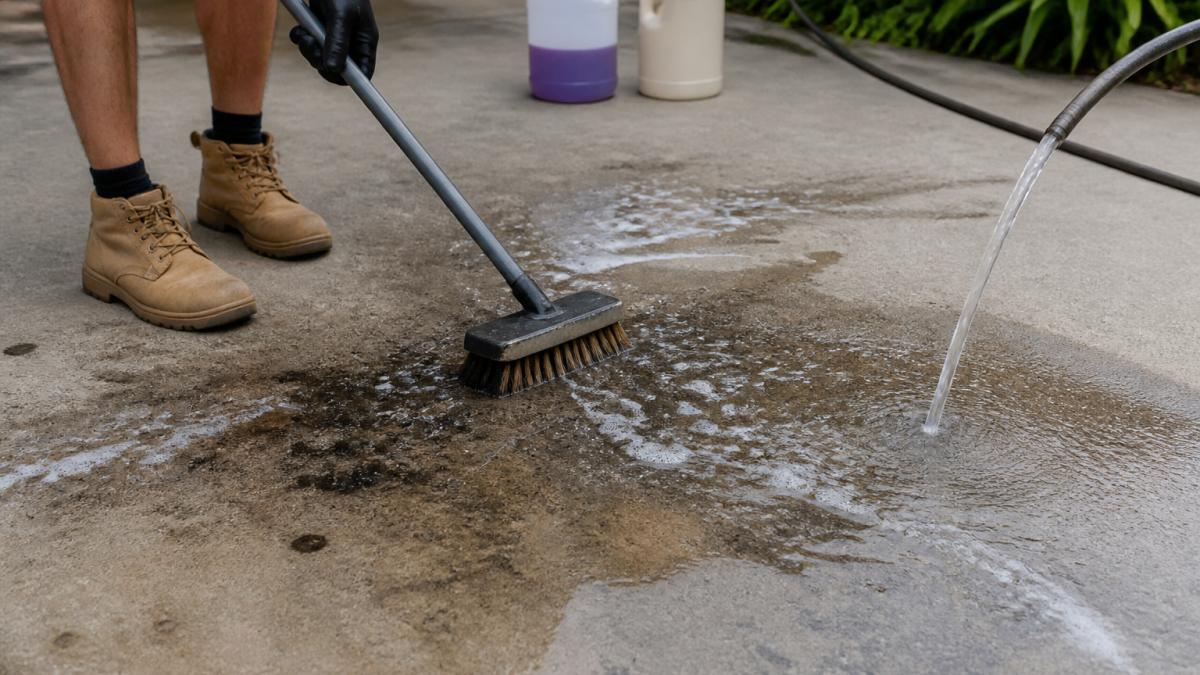
After applying detergent or degreaser, let it sit for 15 to 30 minutes. This dwell time allows the solution to break down the oil bond. Do not skip this step.
Scrub the stain with a stiff brush or a steel brush. Use firm, circular motions, working the brush into the concrete pores.
Rinse thoroughly with warm or hot water. Hot water helps dissolve remaining oil residue. Rinse until the water runs clear and no soap remains. Incomplete rinsing can leave detergent residue that attracts dirt.
Scrubbing steps in order:
- Apply detergent or degreaser generously.
- Wait 15 to 30 minutes for chemical breakdown.
- Scrub with a stiff brush using circular motions.
- Rinse with warm or hot water until clear.
- Repeat if the stain remains visible.
Pressure Washing Oil Stains from Driveway: Equipment and Safety
Pressure washing removes loosened oil residue and cleans the surface after absorbent and detergent treatment. It is a powerful tool but requires caution to avoid damage. The key is matching pressure, nozzle type, and technique to your driveway material, and knowing how to proceed when a stain doesn't respond as expected.
Pressure Settings and Nozzle Choice by Surface
Concrete can generally tolerate 3,000 to 4,000 PSI (pounds per square inch) with a 25-degree or 15-degree nozzle. Asphalt requires lower pressure, around 1,500 to 2,000 PSI, as higher settings can gouge the softer surface; use a 25-degree nozzle and keep the wand moving.
Distance is as important as pressure. Hold the nozzle at least 300 mm from the surface. Closer distances concentrate the force and risk damage. Move the nozzle steadily across the stain rather than holding it in one spot.
Water temperature also makes a difference. Warm or hot water helps break down remaining oil residue more effectively than cold water.
Troubleshooting by Stain Response
If the stain remains dark after pressure washing, it has not fully lifted. This usually means the oil has penetrated deeper than the surface clean can reach. Reapply absorbent for 24 hours, then repeat detergent and scrubbing before pressure washing again.
If the stain spreads during pressure washing, you are likely driving oil-laden water across the surface. Work from the outside edge of the stain inward, and use a wet vacuum or absorbent socks to contain runoff.
If the stain returns after drying, residual oil remains in the pores. This is common on porous concrete. A second cycle of absorbent and degreaser is usually needed.
Environmental and Safety Precautions
Oil-contaminated runoff damages waterways and harms aquatic life. Direct water flow away from storm drains. If possible, contain the runoff in a bucket or direct it to a garden area where soil can filter it.
Wear safety glasses and gloves when pressure washing. The force can kick back debris and splash contaminated water. Closed-toe shoes protect your feet from spray and debris. Use hearing protection if the machine is loud.
Never pressure wash when rain is forecast. Runoff will flow directly into storm systems. Choose dry weather so you can control where the water goes. Check local council guidelines before you start.
Treating Stubborn Stains: Repeat Methods and Realistic Expectations
Some set-in oil stains do not fully disappear after one treatment. This is normal and expected for stains that have sat for years. The key is to work through a staged process, assess how the stain responds at each stage, and set realistic expectations about the final result.
A Staged Method for Set-In Stains
Stage 1: Absorb. Apply a thick layer of cat litter or baking soda and leave for 24 to 48 hours. Sweep up and dispose of in general waste.
Stage 2: Degrease. Apply a commercial degreaser or a strong dishwashing liquid solution (one part detergent to five parts warm water).
Stage 3: Poultice. Apply a poultice (a paste made from absorbent material like diatomaceous earth or talc mixed with a solvent or degreaser) over the stain. Cover with plastic wrap and tape the edges. Allow it to dry completely (24-48 hours). The poultice draws the oil out as it dries.
Stage 4: Pressure wash. After removing the poultice, pressure wash at the correct setting for your surface to remove residue. Allow the surface to dry completely before judging the result.
When a Stain May Only Lighten
Very old stains, especially on porous concrete, may never disappear completely. The oil can bond so deeply that surface treatment reaches its limit. A faint shadow may remain even after multiple treatments. This is the reality of very old, set-in stains. In these cases, the goal shifts from complete removal to reduction: the stain becomes less visible and less likely to track into the house.
If the stain is in a high-visibility area and a shadow remains, consider a concrete stain or tinted sealer to blend the area. This is a cosmetic fix, not a removal method, but it can be a practical solution when removal has reached its limit.
Limitations of Household Remedies versus Commercial Degreasers
Household methods work well for fresh and moderate stains. For deeply set stains, they have limitations. Multiple applications of baking soda and dishwashing liquid can take weeks to show results. Commercial degreasers work faster but still require patience with very old stains. A common pattern is that household remedies lighten the stain, while commercial degreasers are needed to lift the remaining residue.
This is where professional pressure washing becomes worthwhile. Professional treatment typically costs more than DIY methods but delivers faster results and avoids the risk of surface damage from incorrect pressure settings or harsh chemicals applied improperly.
When to Call a Professional
DIY removal works for fresh and moderate stains. However, for deeply embedded, old, or large oil stains, or if you're unsure about the correct cleaning agents and pressure settings for your specific driveway material, it's often best to call a professional.
Professional teams assess the stain, surface type, and realistic outcomes before starting. They possess the expertise and equipment to avoid damage that DIY pressure washing can cause.
JetSet Power Washing stands out with its commitment to reliability and honesty. We provide free on-site quotes, same-business-day responses, and fixed-price estimates in writing so you know the cost upfront.
Removing set-in oil driveway stains requires patience and the right approach for your specific surface. Start with absorption, move to detergent or degreaser treatment, and finish with pressure washing at appropriate settings. For persistent or challenging stains, professional assistance from JetSet Power Washing can provide efficient and effective solutions.
Frequently Asked Questions
How long should degreaser sit on an oil stain before scrubbing?
Most commercial degreasers work best when left to soak for 15-30 minutes, allowing the chemical to break down the oil residue. For stubborn, set-in stains, extend the dwell time to 45-60 minutes. Always check the product label for recommended contact time. Reapply if the stain remains after rinsing, as thick or years-old stains often need multiple treatments to fully lift.
Can baking soda remove old oil stains from a driveway?
Baking soda works as a mild absorbent for fresh spills but has limited effectiveness on set-in stains alone. It absorbs surface oil but cannot break down hardened residue. For best results, combine baking soda with a detergent solution: sprinkle baking soda over the stain, spray with warm soapy water, let it sit for 20 minutes, then scrub with a stiff brush. For older stains, a commercial degreaser will deliver faster, more reliable results.
Does pressure washing remove oil stains from concrete?
Pressure washing alone rarely removes oil stains completely; hot water and pressure can shift loose residue but cannot dissolve hardened oil. The most effective approach combines pre-treatment with degreaser or detergent, scrubbing, and then pressure washing to rinse. High pressure (above 2500 PSI) can also damage concrete surfaces, so use lower settings (1500-2000 PSI) with hot water for best results without surface harm.
When should you call a professional to clean a driveway oil stain?
Call a professional if household methods fail after two or three treatment cycles, if the stain covers a large area, or if it has been embedded for years. Professionals have trade-grade equipment, industrial-strength degreasers, and knowledge of safe pressure settings for your specific driveway material. They also manage runoff responsibly and can advise on protective coatings to prevent future stains. A free on-site quote from JetSet Power Washing helps determine whether DIY or professional cleaning is the better choice.