 Listicle
Is Pressure Washing Your Concrete Driveway Worth It?
Last Updated: October 28, 2026
Quick Summary
Yes, pressure washing concrete driveways is usually worth it because it removes dust, grime, tyre marks and algae that dull the surface. A clean driveway looks better, reduces slip hazards and makes a strong first impression on buyers.
- Concrete is porous, so dust, algae and traffic film build up over time.
- Too much pressure or a nozzle held too close can etch the surface.
- Oil and tyre marks may fade rather than disappear completely if they are old.
- Driveways under trees or in the wet season need cleaning more often.
- Avoid 0-degree pinpoint nozzles, as they cause permanent etch marks on concrete.
Table of Contents
- Removing dirt, grime and surface buildup
- Curb Appeal and Traction: The Practical Benefits
- How to Pressure Wash a Concrete Driveway Safely
- How Often to Pressure Wash a Driveway in Tropical Conditions
- Choosing the Right Pressure Washer PSI for Concrete
- Pressure Washing Oil Stains from Concrete
- Booking a Free On-Site Quote for Your Driveway
- Frequently Asked Questions
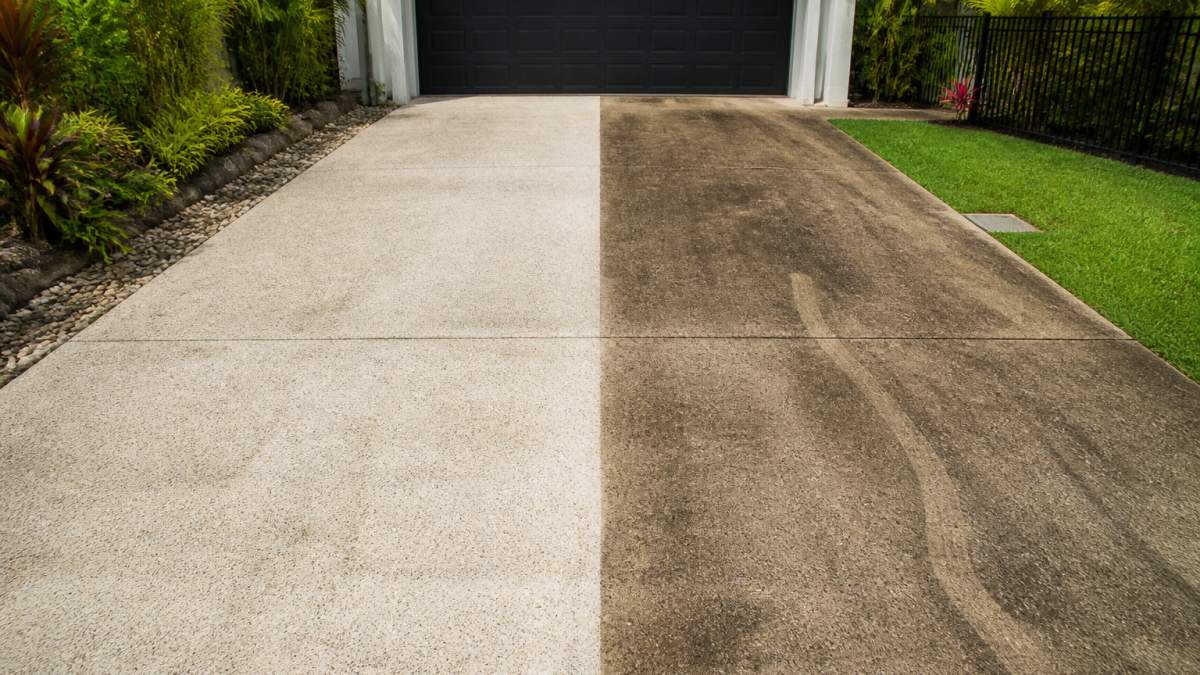
Most driveways look tired long before they are actually worn out. A grey film of dust, tyre marks and dark patches around the car bay can make a solid concrete surface look neglected. Pressure washing concrete lifts that layer off, and the difference is often immediate. A driveway that looked finished at the end of a long dry season can look refreshed after a wash.
Removing dirt, grime and surface buildup
Concrete is porous, so it holds onto whatever settles on it: dust, leaf litter, algae and the fine film that builds up from traffic. Over time that layer becomes more than cosmetic. A pressure washer working at the right setting breaks that buildup loose and rinses it away, leaving a clean surface that reads as well maintained. Traditional pressure washing of concrete, driveways and hardscapes accounts for an estimated 25-35% of residential pressure-washing revenue, which reflects how common this job has become for homeowners (Southeast Softwash industry outlook, The State of the Pressure Washing Industry in 2026).
The key is technique. Too much pressure, or the wrong nozzle held too close, can etch the surface or leave uneven streaks. That is why the method matters as much as the machine when pressure washing concrete.
Lifting oil, tyre marks and stubborn stains
Oil and tyre marks are the stains most driveway owners want gone first. They sink into concrete and rarely respond to a simple rinse.
Be realistic about results. Very old, deeply absorbed stains may fade rather than disappear completely, and a professional assessment can tell you what is achievable before any work begins.
Curb Appeal and Traction: The Practical Benefits
Curb appeal is the obvious reason people book a driveway clean, but it is not the only one. A clean driveway also reduces slip hazards.
For homeowners preparing a property for sale, the driveway is often the first surface a buyer sees. Clean concrete signals that the rest of the property has been looked after. If the whole exterior needs attention, a full exterior pressure washing service can cover roofs, walls and paths in a single visit, which is often more efficient than booking separate jobs.
How to Pressure Wash a Concrete Driveway Safely
Work through the steps in order. Rushing the setup is where most damage happens.
- Sweep loose debris from the surface so it does not get driven into the concrete.
- Check the surface for cracks, flaking or previous sealing before choosing your settings.
- Select a wide-angle nozzle and start at the lowest effective pressure.
- Apply a suitable cleaning solution and allow it to dwell for the recommended time.
- Work in consistent, overlapping passes, keeping the nozzle moving.
- Rinse thoroughly from one end of the driveway to the other.
Watch out: holding the nozzle too close to the surface can etch concrete and leave permanent marks, so keep a steady distance and test a small patch first.
For many homeowners, a professional driveway cleaning guide comparing pressure washing and soft washing is a useful way to decide whether to do the job themselves or book it out.
How Often to Pressure Wash a Driveway in Tropical Conditions
There is no single schedule that suits every property, but a few practical triggers make the decision easier than a calendar alone.
Visible buildup. When the concrete reads grey rather than its original colour, or when tyre marks and leaf tannin stains stop rinsing off with a hose, it is time.
Traffic and tree cover. Driveways under mango, fig or gum trees collect organic growth faster than open ones, because leaf litter and sap feed mould and algae. Homes with two or more vehicles, or with a car bay that gets daily use, also build up tyre marks and oil film faster than a driveway used once a week.
Seasonal timing. In tropical conditions the wet season accelerates mould and algae, so timing matters:
For homeowners unsure whether their driveway needs a full wash or just a spot treatment, a professional driveway cleaning guide comparing pressure washing and soft washing can help clarify the right approach for the surface and the season.
Use these triggers to decide when your driveway needs cleaning.
| Trigger | Signal | When to act |
|---|---|---|
| Visible buildup | Grey surface, tyre marks | When hose rinsing no longer removes stains |
| Tree cover | Leaf litter, sap, organic growth | Faster buildup than open driveways |
| Heavy use | Daily car bay use, multiple vehicles | Tyre marks and oil film build faster |
| Wet season | Mould and algae growth | Accelerated; plan timing around it |
Choosing the Right Pressure Washer PSI for Concrete
The reason is mechanical. Concrete is a cement matrix holding aggregate together. Too much pressure at too close a distance drives water into pores and microcracks, and can erode the cement paste before the aggregate, leaving a rough, etched or 'broomed' finish that cannot be washed back. On older concrete, or concrete that has already spalled or been previously sealed, the safe ceiling is lower again.
Pressure Washing Oil Stains from Concrete
Oil stains are among the hardest marks to shift. Fresh spills respond far better than stains that have been baked into the concrete for years.
If the stains are old or large, a professional assessment of what can be removed will tell you what to expect before any work starts, which avoids paying for results that cannot be achieved.
Booking a Free On-Site Quote for Your Driveway
Every driveway is different, and the right method depends on the surface, the staining and how the concrete has been treated before. The simplest next step is a free on-site quote. JetSet Power Washing offers free quotes, same-business-day responses and a fixed price confirmed in writing before work begins, so you know the cost before anyone starts.
To discuss a driveway clean, you can [book professional driveway cleaning | jetsetpowerwashing.com.au].
Frequently Asked Questions
How often should you pressure wash a concrete driveway?
Most driveways in tropical Far North Queensland benefit from a pressure wash once or twice a year, though heavy tree cover, mould or frequent oil drips may call for more regular cleaning. Driveways near the coast can pick up salt and mildew faster, so checking the surface every few months is sensible. Scheduling a clean before a property inspection or sale also helps the driveway look its best. JetSet Power Washing can recommend a cleaning frequency during a free on-site quote.
Can pressure washing damage a concrete driveway?
Yes, if the wrong nozzle, pressure setting or technique is used. Excessive pressure can etch the surface or leave uneven streaks, while holding the wand too close can gouge older concrete. Trade-grade equipment and experienced operators reduce this risk. Concrete in good condition with no major cracks is the most suitable for pressure washing, and an on-site check can confirm whether it is ready.
Does pressure washing remove oil stains from concrete?
JetSet Power Washing removes oil from driveways. Ask for a free on-site quote to discuss your driveway.
Should you seal a concrete driveway after pressure washing?
Sealing is worth considering after a pressure wash because the surface is clean and open to treatment, and a sealer can help resist future staining and moisture. Whether it is needed depends on the age and condition of the concrete. Allow the driveway to dry fully before sealing, which can take a day or more in humid Queensland weather. Ask for advice during your quote if you are unsure.
Your driveway is often the first thing people notice about your home. A clean surface costs far less than replacing worn concrete, and it is easier to maintain than most homeowners expect. Get in touch with JetSet Power Washing for a free on-site quote, and we will tell you honestly what your driveway needs.