 How-to
How to Find Reliable Pressure Cleaners Before You Book
Last Updated: November 4, 2026
Quick Summary
To find reliable pressure cleaners, check build quality, spare-parts availability and warranty exclusions before comparing price. Then confirm insurance, read reviews, and ask for a written quote that specifies the surfaces, cleaning method and exclusions.
- Check whether the pump head is metal rather than plastic, since plastic housings often crack first.
- Ask whether you can buy replacement pump heads and lances for the model in twelve months.
- Request a certificate of currency for public liability insurance before booking.
- Match the machine's flow rate to the task and avoid high pressure on painted or delicate surfaces.
- Compare quotes line by line, checking scope, method, inclusions and exclusions.
Table of Contents
- What Makes a Pressure Cleaner Reliable
- Questions to Ask a Pressure Cleaner Before Booking
- Checking Insurance, Licences and Reviews
- Comparing Pressure Cleaning Quotes Line by Line
- Choosing the Right Method for Painted and Delicate Surfaces
- Red Flags That Signal an Unreliable Provider
- Booking a Reliable Pressure Cleaner for Your Property
- Frequently Asked Questions
What Makes a Pressure Cleaner Reliable
Reliability in a pressure cleaners buyer's choice is not a single feature. It is the combination of build quality, serviceability and honest specification that determines whether the machine still performs after two or three seasons of regular use. Most buyer's guides stop at PSI and flow rate; the factors below are what separate a machine that lasts from one that ends up at the tip.
Build quality you can inspect. Look for a metal pump head rather than plastic, brass or stainless fittings at the hose and lance connections, and a frame that does not flex when you lift it. A common pattern among repairers is that failed units often share the same weak point: a plastic pump housing that cracks under thermal cycling. Ask what the pump head is made from before you compare price.
Repairability and spare parts. This is the factor most guides ignore. A reliable machine is one you can fix. Before buying, check whether the manufacturer publishes an exploded parts diagram, whether replacement hoses, nozzles, O-rings and unload valves are stocked locally, and whether the warranty is voided by user servicing. A machine with no spare-parts pathway is effectively disposable, no matter how good its specifications look on paper. Ask the retailer directly: "Can I buy a replacement pump head and lance for this model in twelve months?" If the answer is vague, treat that as a reliability warning.
Water efficiency. Pressure cleaners vary in how much water they use per minute, and a machine that is oversized for the job wastes water and can damage surfaces. Check the rated flow rate and match it to the task; a lower-flow unit with a good nozzle is often more controllable on render and painted timber than a high-flow unit run at reduced pressure. If water restrictions apply in your area, confirm the machine and method comply before booking.
Duty cycle and thermal protection. Cheaper units are rated for short run times and need cool-down periods. Ask whether the model has thermal overload protection and what its continuous running limit is. A machine that shuts down mid-job is not reliable, even if it starts every time.
Warranty that covers the parts that fail. A long warranty on the motor is less useful if the pump, seals and hose are excluded. Read the exclusions, not just the headline term, and check whether commercial use voids cover if you plan to use it on a rental property or home business.
Watch out: A very low price often reflects a sealed pump and no local spare-parts supply. Check what the price includes, and what it excludes, before you compare it with others.
Questions to Ask a Pressure Cleaner Before Booking
The best way to test a provider is to ask direct questions before you book. A good cleaner will answer them without hesitation. If they dodge, that tells you something.
Start with these:
- How will you clean my surface? The answer should mention pressure settings, nozzle choice or soft washing. A vague "we blast it" is a warning sign.
- Is the price fixed? Ask for the final cost in writing, including any additional items such as oil stain treatment.
- Are you insured? Public liability cover protects your property if something goes wrong.
- What is your response time? Find out how quickly they reply to calls and quote requests.
- Do you have experience with my material? Tell them if you have render, timber, painted walls, tiles or metal roofing.
Before you call, it helps to know who you are speaking to. You can meet the local team behind JetSet Power Washing to see how the business is run.
Checking Insurance, Licences and Reviews
Insurance and reviews give you evidence beyond a sales pitch. Ask to see a current certificate of currency for public liability insurance. A legitimate business will provide it without fuss.
Next, check reviews. Look for patterns rather than single comments. Many customers mention how a provider handled timing, communication and cleanup. Read reviews from homes similar to yours, such as older render houses or properties with Colorbond roofs.
Be cautious of businesses that have no verifiable reviews, cannot provide insurance details or refuse to give a business name. Checking these points takes minutes and can prevent costly problems later.
Comparing Pressure Cleaning Quotes Line by Line
Two quotes can look similar and still describe very different jobs. Compare them line by line before you choose.
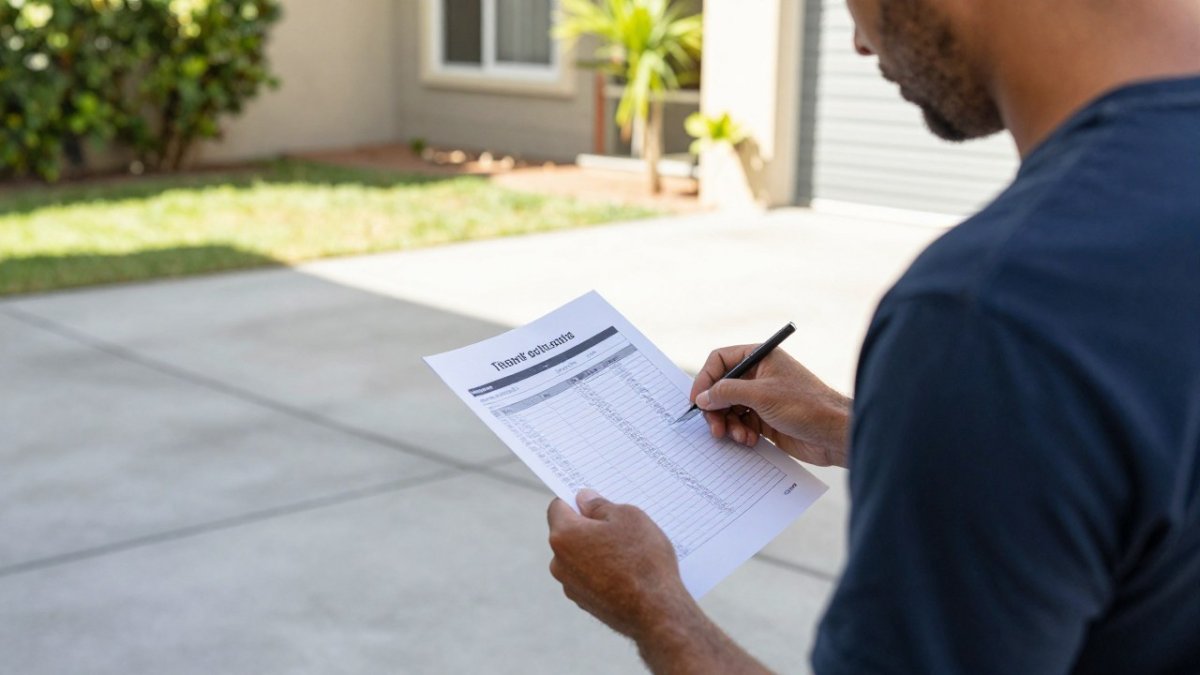
Check these items:
- Scope: Does the quote list the surfaces to be cleaned, such as driveway, roof, walls or all three?
- Method: Does it say whether the work uses pressure washing, soft washing or both?
- Inclusions: Are chemicals, stain treatment and waste water handling included?
- Exclusions: What is not covered? Ask about extra charges for heavy staining or difficult access.
- Validity: How long does the price stay valid?
Keep the quote in writing and file it with your records. If you want a step-by-step process for requesting a fair quote, read this guide to getting a free pressure washing quote.
A real example helps. If one quote covers the driveway only and another covers the driveway, roof and walls, the lower price does not mean better value. Compare like with like.
Use this checklist to compare two quotes side by side and spot what each one actually includes.
| Quote item | What to check | Why it matters |
|---|---|---|
| Scope | Which surfaces are listed | Confirms like-for-like comparison |
| Method | Pressure washing, soft washing or both | Wrong method can damage surfaces |
| Inclusions | Chemicals, stain treatment, waste water | Shows the real total cost |
| Exclusions | Extra charges for heavy staining or access | Prevents surprise costs |
| Validity | How long the price stays valid | Sets your decision window |
Choosing the Right Method for Painted and Delicate Surfaces
Method matters as much as the provider. The wrong method does not just clean poorly; it removes material. Pressure washing is effective on hard, durable surfaces such as concrete pavers, exposed aggregate and brick. It can damage painted timber, render, cladding and some roofing if the pressure, nozzle angle or dwell time is wrong.
Pressure and nozzle basics. Pressure at the surface is a function of the machine's rated pressure, the nozzle orifice and the distance from the surface. A narrow fan tip concentrates force; a wider fan spreads it. On delicate surfaces, the practical approach is to increase distance and widen the fan rather than rely on the machine's maximum rating. Ask the provider what nozzle they will use and at what distance, not just what pressure the machine produces.
Soft washing explained. Soft washing uses a low-pressure pump to apply a cleaning solution, then rinses at low pressure. The cleaning action comes from the chemistry and dwell time, not impact force. It suits painted walls, render, cladding, timber and many roofs because it removes moss, algae and grime without driving water into joints or lifting coatings. For a side-by-side look at soft washing versus pressure washing roofs, see how the two methods compare on safety, cost and effectiveness. The trade-off is that it takes longer and depends on correct dilution and dwell time; a rushed soft wash can leave residue or fail to kill the growth at the root.
Surface-by-surface guidance.
- Concrete and pavers: pressure washing is appropriate; watch for joint sand being blown out, which later causes weed growth and loose pavers.
- Render and painted masonry: soft washing is usually safer; high pressure can open hairline cracks and force water behind the coating.
- Painted timber and weatherboards: low pressure only; high pressure strips paint and raises the grain.
- Colorbond and metal roofing: low pressure with a suitable detergent; high pressure can damage the coating and invalidate the roof warranty.
- Tiles and terracotta: low pressure; high pressure can crack tiles and dislodge bedding.
Detergents and runoff. Ask what cleaning agent will be used, whether it is appropriate for the surface and how runoff will be managed. Some detergents are harmful to garden beds and waterways, and runoff containing cleaning agents should not enter stormwater drains. A reliable provider will explain how they contain and dispose of wastewater, particularly on sloping sites.
Watch out: Some providers apply high pressure to everything to save time. Ask how they will protect delicate surfaces, such as painted fences and Colorbond sheeting, before the job starts, and get the method confirmed in the written quote.
Red Flags That Signal an Unreliable Provider
Some warning signs appear early. Walk away if you notice any of these:
- No written quote, or a verbal price only
- Pressure that is described as "as strong as possible" on all surfaces
- No insurance details when asked
- Unwillingness to inspect the property before quoting
- Pressure to pay the full amount upfront
- Vague answers about how they will avoid damage
A reliable provider will explain their process clearly and respect your decision to shop around.
Booking a Reliable Pressure Cleaner for Your Property
Once you have checked insurance, compared quotes and confirmed the method, you are ready to book. Start by requesting a free on-site quote from pressure washing services across Far North Queensland, which cover driveways, roofs, exterior walls and full property cleans in Cairns, Port Douglas, Palm Cove, Trinity Beach, Edmonton and Mareeba.
When you are ready to talk through your job, contact JetSet Power Washing for a quote. Have photos of the areas you want cleaned and a note of any stubborn stains or delicate materials. That information helps the team give you an accurate, fixed-price quote in writing.
Frequently Asked Questions
How do I know if a pressure cleaning company is reliable?
Check that the business holds current public liability insurance, responds to enquiries promptly, and provides a written quote before any work starts. Look for consistent, detailed reviews over time rather than a single high rating, and confirm the business has a verifiable local address and contact details. A provider that explains its equipment and methods without pressure tactics is usually a safer choice than one that pushes for an immediate booking.
What should I ask before hiring a pressure cleaner?
Ask what surfaces they will clean and which method they will use for each, particularly whether they use soft washing for painted surfaces, render or cladding. Confirm they carry public liability insurance and ask how they handle damage if it occurs. Ask whether the quote is fixed and what could change the final price, and find out how quickly they can attend and respond after you book.
Should a pressure cleaner have insurance?
Yes. Public liability insurance protects your property if the cleaner causes damage, such as a cracked render wall, a scratched roof panel or water entering the home. Ask the provider to show a current certificate of currency before you book. A cleaner who is reluctant to provide this is a warning sign, and you should confirm the policy covers the type of work you need.
What should a pressure cleaning quote include?
A reliable quote lists the surfaces to be cleaned, the method for each, the total price in AUD, and whether that price is fixed. It should state any exclusions, such as access fees or additional stains, and the timeframe for completion. Get the quote in writing before work begins so you can compare it directly against other providers on the same basis.