 How-to
7 Steps to Clean Heavy Machinery Safely
Last Updated: October 25, 2026
Quick Summary
Cleaning heavy machinery in far north in Queensland requires choosing the right pressure and method for each component, protecting electrical and hydraulic systems from water intrusion, and managing contaminated runoff properly. Regular cleaning prevents rust and corrosion caused by tropical humidity and salt spray, while also revealing maintenance issues that affect resale value.
- Pressure wash at 150-200 bar for painted steel frames, use steam cleaning for engine blocks, and soft wash at 40-80 bar for electrical connectors and seals.
- Cover all electrical connectors, hydraulic fittings, engine air intakes, and breather holes with waterproof tape or plastic before cleaning.
- Dry machinery thoroughly with compressed air after washing and let it sit in direct sun for at least 2 hours to prevent rust.
- Contain all wastewater using tarps or berms and dispose of it at an approved facility; never pour contaminated water into storm drains.
- Schedule the final cleaning pass 24 hours before a buyer inspection to allow protective coatings to cure and the machine to dry completely.
Table of Contents
- Why Cleaning Heavy Machinery Matters
- Step 1: Inspect and Prepare Your Machinery Before Cleaning
- Step 2: Choose the Right Cleaning Method for Heavy Equipment Degreasing
- Step 3: Protect Electrical, Hydraulic, and Engine Components
- Step 4: How to Clean Excavator Tracks and Undercarriage Mud
- Step 5: Manage Wastewater, Oil, and Chemical Runoff
- Heavy Machinery Cleaning Checklist for Pre-Sale Preparation
- Cleaning Machinery Before Sale: Final Steps to Maximise Value
- Frequently Asked Questions
Why Cleaning Heavy Machinery Matters
Heavy machinery accumulates grime, oil, mud, and corrosive salt spray that degrades performance and shortens equipment lifespan. In Far North Queensland, tropical humidity, seasonal flooding, and salt-laden air accelerate rust and component failure. Regular cleaning heavy machinery in far north in Queensland isn't cosmetic, it's preventative maintenance that protects your investment.
Buyers inspect undercarriages, hydraulic lines, and engine bays. Visible oil stains, mud buildup, and corrosion signal poor maintenance and justify lower offers, while a spotless machine commands premium pricing.
Beyond resale, clean machinery runs cooler and more efficiently: mud clogs cooling fins, oil buildup insulates hydraulic components, and corroded connectors misfire. Learn more about commercial exterior cleaning providers in Cairns and the standards that apply to heavy equipment operations.
Step 1: Inspect and Prepare Your Machinery Before Cleaning
Before spraying anything, walk the entire machine with a checklist. Document rust spots, leaking seals, cracked hoses, and loose fasteners. Photograph problem areas, this baseline helps you spot new damage during cleaning and proves pre-existing conditions to buyers.
Check all access panels and covers. Ensure hydraulic reservoirs are sealed, fuel caps are tight, and electrical connections are dry and intact. Open any compartments where water could pool and cause corrosion.
Remove loose items: toolkits, chains, tarps, and debris trapped in crevices. Compressed air dislodges mud from tight spaces without introducing water. Pay special attention to track rollers, idler wheels, and the spaces between boom sections where mud traps moisture.
Document the machinery's current condition in writing, noting any pre-existing damage, rust, or fluid leaks. This protects you if a buyer later claims cleaning caused harm.
Step 2: Choose the Right Cleaning Method for Heavy Equipment Degreasing
Not all machinery tolerates the same pressure, and the wrong method does more damage than the dirt it removes. Excavators with exposed electrical harnesses need low-pressure soft washing. Dozers with sealed components handle higher pressure.
Use this decision framework before you pick up a wand:
| Machine area or component | Preferred method | Pressure guide | Why |
|---|---|---|---|
| Painted steel frames, counterweights, track links | Pressure washing | 150-200 bar | Removes compacted mud and oil without stripping cured paint |
| Undercarriage and track frames | Pressure washing after a soft pre-rinse | 100-150 bar | Shifts packed soil from gaps between shoes |
| Engine blocks and hydraulic manifolds | Steam cleaning | Low pressure, high temperature | Dissolves grease without soaking electricals or forcing water into seals |
| Rubber seals, hoses, electrical connectors, air filters | Soft washing | 40-80 bar | Lifts light mud and algae without water intrusion |
| Cab exterior, decals, polished surfaces | Soft washing | 40-80 bar | Protects finishes and signage |
| Heavily oil-caked engine bays | Degreaser dwell, then steam | Low pressure | Chemical breaks the oil layer; steam rinses without spreading it |
Pressure washing at 150-200 bar removes stubborn oil and mud quickly from painted steel frames, track links and undercarriage surfaces.
Steam cleaning penetrates grease without harsh chemicals and leaves less residue than pressure alone.
Soft washing at 40-80 bar suits delicate components: rubber seals, electrical connectors, air filters and painted surfaces.
For stubborn oil stains, apply a biodegradable degreaser and let it dwell for the manufacturer's stated time, commonly 10-15 minutes, before rinsing.
Three trade-offs to weigh on every job:
- Speed versus safety. Pressure washing is fastest but carries the highest risk around seals, wiring and bearings. Steam is slower but safer near sensitive assemblies. Soft washing is safest but needs a pre-treatment for heavy grease.
- Water volume versus runoff. High-volume pressure washing generates more wastewater to contain and dispose of. Steam uses less water but concentrates contaminants, so the runoff still needs capture.
- Chemical strength versus disposal cost. Stronger degreasers cut labour time but create more hazardous runoff and higher disposal obligations. Mix at the manufacturer's recommended strength; stronger is not faster once disposal and compliance are counted.
Consider custom cleaning solutions tailored to your specific heavy machinery type and condition if standard methods are not delivering results.
Step 3: Protect Electrical, Hydraulic, and Engine Components
This step separates professional cleaning from damage. Water inside electrical connectors causes shorts. Water in hydraulic lines contaminates fluid and jams actuators. Water in engine air intakes hydro-locks cylinders.
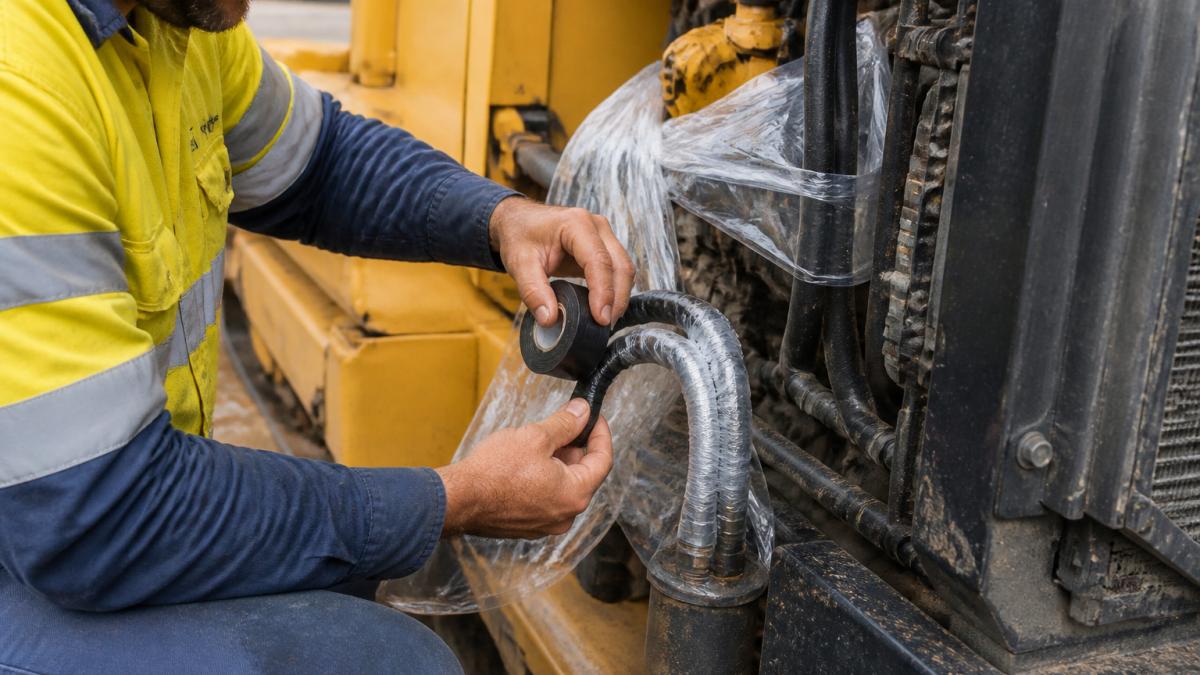
Cover every electrical connector with waterproof tape or plastic caps. Wrap exposed wiring harnesses in plastic sheeting secured with electrical tape.
Hydraulic hose connections are vulnerable.
Engine compartments deserve extra care. Cover alternators, starter motors, and battery terminals, tape over sensor openings, protect air filters with plastic bags, and pinch or cap any breather tube.
After cleaning, remove all protective coverings immediately, since trapped moisture under plastic accelerates corrosion.
Step 4: How to Clean Excavator Tracks and Undercarriage Mud
Excavator tracks trap mud, salt, and sand that corrode track links and roller bearings. How to clean excavator tracks requires patience because mud sits deep in the grooves and between the shoes.
Start with soft pressure (60-80 bar) to rinse away loose mud. Angle the spray downward to push debris out rather than deeper in.
Once loose mud is gone, increase pressure slightly (100-150 bar) and focus on the gaps between track shoes and the inside of the track frame.
For heavily rusted track links, apply a rust converter or degreaser and let it sit for 10 minutes before washing at moderate pressure. High-pressure spray on heavily corroded metal can damage the link itself.
Dry the tracks thoroughly after cleaning. Use compressed air to blow water from between the shoes and inside the track frame, then position the machine in direct sun for at least 4 hours.
If the tracks won't be used for several days after cleaning, apply a light machine oil or rust preventative to the track links and rollers.
Step 5: Manage Wastewater, Oil, and Chemical Runoff
Pressure washing machinery generates wastewater contaminated with oil, grease, heavy metals, and sediment. Letting it run into soil or storm drains violates environmental protection laws and creates liability.
Contain all runoff. Use a tarp or portable berm to create a collection area beneath the machinery. Slope the ground slightly so water flows toward a collection point. Use sandbags or berms to direct flow.
For machinery with heavy oil buildup, use an oil-absorbent mat or skimmer to separate floating oil before disposal.
Never pour contaminated water down storm drains or into natural waterways. Contact your local council or an environmental waste contractor for proper disposal options in your area.
If you're using chemical degreasers, verify they're biodegradable and approved for your region.
Document your wastewater disposal: date, volume, disposal method, and facility used. This record protects you if environmental compliance is ever questioned.
Heavy Machinery Cleaning Checklist for Pre-Sale Preparation
Cleaning is also your best inspection opportunity. Grime hides cracked hoses, weeping seals, loose fasteners and early corrosion, so a scheduled wash doubles as a fault-detection routine. Use the checklist below for pre-sale preparation, then keep using it as a maintenance schedule between sales.
| Task | Frequency | Expected outcome |
|---|---|---|
| Inspect for leaks, cracks and damage | Before every clean | Document baseline condition and catch faults early |
| Remove loose debris and mud | Daily or after each shift in wet conditions | Clean, professional appearance; less moisture trapped against metal |
| Soft wash to remove algae and light grime | Weekly during listing; fortnightly in general service | Brightens paint and metal; limits mould growth |
| Heavy equipment degreasing of engine and hydraulics | Before buyer inspection; monthly in general service | Removes oil stains and reveals new leaks |
| Clean excavator tracks and undercarriage | Before final showing; weekly in muddy or coastal work | Eliminates mud and exposes track and roller condition |
| Manage and dispose of wastewater properly | After each cleaning | Complies with environmental obligations |
| Dry thoroughly with compressed air | After washing | Prevents rust and water damage |
| Apply rust preventative to exposed metal | Before storage or idle periods | Protects against salt and humidity |
How to use the schedule between sales. In tropical conditions, mud and salt spray do not wait for a sale date.
What to look for while you clean. Treat every wash as an inspection round. Check for:
- Hydraulic hoses with weeping fittings or cracked outer covers
- Track links and roller bearings showing rust bloom or flat spots
- Electrical connectors with corrosion or water staining
- Cooling fins packed with mud or seed heads
- Paint blistering that signals corrosion underneath
Record anything you find with a date and photo. A dated, completed checklist proves you have cared for the equipment systematically, and buyers often ask for evidence of regular maintenance.
Print this checklist and tick off each item as you complete it. Adjust the frequencies to your operating conditions, but keep the inspection habit consistent; the cleaning is what makes the inspection possible.
Cleaning Machinery Before Sale: Final Steps to Maximise Value
The final 48 hours before a buyer inspection are critical. Schedule your last cleaning pass 24 hours before the showing, not the morning of.
On the day of the showing, do a final walk-around with a microfibre cloth. Wipe down the cab, controls, and any chrome or polished surfaces.
Position the machinery in good natural light if possible.
Start the engine if it's safe to do so. A machine that starts smoothly and runs quietly suggests good maintenance.
Have documentation ready: service records, maintenance logs, and photos of the cleaning process.
At JetSet Power Washing, we use trade-grade equipment and tailored cleaning methods.
If you're uncertain whether your equipment is ready for sale or need professional-grade cleaning before showing it to buyers, contact us for a free on-site quote.
Frequently Asked Questions
How do you clean heavy machinery safely without causing damage?
Start by covering all electrical connections, hydraulic ports, and engine openings with waterproof tape or plastic sheeting. Use low-pressure washing (below 80 bar) on sensitive areas and high-pressure only on metal surfaces and undercarriage. Always work from top to bottom, maintain a safe distance (at least 30 centimetres) from delicate components, and never direct water directly at seals or bearings. Allow the machinery to dry completely before restarting the engine.
What's the best way to remove stubborn oil and grease from heavy equipment?
Heavy equipment degreasing requires a two-stage approach. First, apply a biodegradable degreaser and let it sit for 10-15 minutes to break down the oil. Then use low-to-medium pressure (60-80 bar) to rinse away the loosened grease. For extremely stubborn stains, a second application may be needed. Avoid high-pressure blasting, which can force grease into seals and cause long-term damage.
How often should heavy machinery be cleaned to maintain its condition?
In Far North Queensland's tropical climate, machinery exposed to mud, salt spray, and humidity should be cleaned every 4-8 weeks, or after major work in wet or dusty conditions. Regular cleaning prevents rust, extends component life, and identifies leaks or damage early. Machinery stored indoors or used infrequently can go 8-12 weeks between cleans. Before sale or transport, a thorough clean is essential to show potential buyers the true condition and attract fair pricing.
Can you pressure wash an engine or electrical components directly?
No. Direct pressure washing of engines and electrical components risks water ingress, short circuits, and component failure. Always cover or isolate these areas before cleaning. Use only low-pressure spray (below 60 bar) if you must clean near the engine, and keep water away from the alternator, starter motor, and wiring harnesses. For engine bays, dry-cleaning methods like compressed air or soft brushing are safer alternatives.
Preparing machinery for sale requires more than a quick rinse. It demands a methodical approach that protects components, manages environmental responsibility, and presents equipment honestly to buyers. Follow this seven-step process, use the checklist to stay organised, and your machinery will command the premium price it deserves.