 Comparison
7 Alternatives to High Pressure Cleaning for Your Home
Last Updated: November 1, 2026
Quick Summary
The best high pressure alternative is soft washing, a low-pressure method that uses a cleaning solution and gentle rinse to kill mould and algae at the root. It is generally safer for roof tiles, Colorbond, render, painted walls and timber, where high pressure can cause damage.
- Soft washing kills organic growth at the root rather than blasting it off the surface.
- High pressure can etch timber, crack older render, lift paint and force water under roof tiles.
- Soft washing is generally the safer option for roof tiles and Colorbond.
- Test a small area first and use the lowest effective method on anything hard to repair.
- Ask for a written method recommendation and a fixed price before booking.
Table of Contents
- Why High Pressure Cleaning Is Not Always the Right Choice
- Soft Washing vs Pressure Washing: How the Two Methods Compare
- Is Soft Washing Safe for Roof Tiles and Colorbond?
- Comparing High Pressure Alternatives Side by Side
- Surface-by-Surface Method Selection for Driveways, Render and Walls
- Signs Your Home Needs Professional Soft Washing
- Booking a Free Quote for Your Next Exterior Clean
- Frequently Asked Questions
Why High Pressure Cleaning Is Not Always the Right Choice
If you are searching for a cairns high pressure cleaning alternative, you are probably not looking for less cleaning. You want the grime, mould and tyre marks gone without damaging what you already own. High pressure is a useful tool, but it is not the right tool for every surface. Cairns Regional Council guidance on stormwater and drain contamination
Pressure washing is a method that uses a high volume of water at high force to strip dirt and growth from a surface. Soft washing is a lower-pressure method that uses cleaning solutions and a gentle water flow to kill and remove organic growth. Both have a place, and the right choice depends on the material beneath the grime.
Risks and limitations of high pressure
High-pressure water can etch timber, crack older render, lift paint and force water under roof tiles. The cleaning power that removes black streaking from concrete can also strip the protective surface from softer materials.
Our advice is simple. Use the lowest effective method, test a small area first, and avoid high pressure on anything you cannot easily repair.
Soft Washing vs Pressure Washing: How the Two Methods Compare
Soft washing kills organic growth such as mould, algae and lichen at the root, rather than blasting it off the surface. Pressure washing relies on force to remove what is already there. Soft washing is designed to slow regrowth on organic growth, while pressure washing removes visible growth from hard surfaces like concrete driveways.
Is Soft Washing Safe for Roof Tiles and Colorbond?
Soft washing is generally the safer option for roof tiles and Colorbond because it avoids the force that can dislodge tiles, scratch coated steel or drive water beneath flashing. Our step-by-step guide to cleaning a Colorbond roof safely covers the safe methods and when to call professionals. Metal and tile roofs still need careful handling, and the method, solution and technician experience all matter.
If your roof is badly damaged or the surface is unusual, a specialist roof inspection is the sensible first step.
Comparing High Pressure Alternatives Side by Side
The table below compares common alternatives to high-pressure cleaning on the factors that matter most to homeowners: how each method works, where it is safe, how long results tend to last and what drives the price.
| Method | How it works | Best for | Pressure level | Typical result lifespan | Main cost drivers |
|---|---|---|---|---|---|
| Soft washing | Low-pressure application of a cleaning solution, dwell time, then a gentle rinse | Roofs, render, painted walls, Colorbond, timber | Low | Longer on organic growth because the solution kills mould and algae at the root | Solution strength, roof pitch and access, number of storeys |
| Low-pressure rinse | Garden-hose-level flow with a wide nozzle | Light dust, pollen, fresh bird droppings, screens and eaves | Low | Short, days to weeks on exposed surfaces | Time on site, water access, travel |
| Spray-and-leave treatment | Solution applied and left to weather away | Roof organic growth, hard-to-reach elevations | Low | Varies with rainfall and application rate | Product choice, coverage area, reapplication frequency |
| Manual scrubbing | Brush, broom or hand tools with a cleaning solution | Small stubborn stains, delicate trim, heritage profiles | None | Moderate on small areas | Labour hours, surface fragility |
| Pressure washing | High-volume water at high force | Concrete, sealed pavers, brick, hard paving | High | Fast visible result; regrowth returns with the seasons | Surface area, staining severity, water volume |
| Steam cleaning | Heated low-moisture vapour | Weathered timber, sensitive facades, some mould on porous surfaces | Low to moderate | Moderate; heat can kill surface growth | Equipment availability, technician time |
What the comparison means in practice
- Soft washing is the closest like-for-like alternative to high pressure for anything painted, coated or porous. It is slower because the solution needs dwell time, but it is the method most likely to slow regrowth in humid conditions.
- Low-pressure rinsing is a maintenance tool, not a restoration tool. It is useful between deeper cleans but will not remove established mould or algae.
- Spray-and-leave suits roofs where access is difficult, but results depend heavily on application rate and rainfall timing, so ask how often reapplication is expected.
- Manual scrubbing remains the right choice for small, delicate or heritage surfaces where any powered method carries risk.
- Pressure washing is still the fastest route to a clean concrete driveway or sealed paver area, provided the surface is sound and the operator controls the pressure and angle.
- Steam cleaning is a niche option worth asking about for timber and sensitive facades, though not every provider carries the equipment.
Cost factors rather than fixed prices
Quotes vary with surface area, height and access, the level of organic growth, water and power availability, and whether gutters, windows or gardens need protection. Rather than compare headline prices, compare what each quote includes: surface preparation, plant protection, rinse-down, and whether the price is fixed in writing.
Surface-by-Surface Method Selection for Driveways, Render and Walls
Different surfaces need different methods, and the wrong match is where damage happens. If you are weighing soft washing for your walls or render, you can review our exterior walls service to see how we approach these surfaces. The guide below matches common exterior materials to the safest effective approach, with the risks to watch for.
Concrete driveways and paths
Concrete is hard and forgiving, which is why pressure washing is commonly used here.
Sealed pavers and brick
Pressure washing can be suitable for sound, sealed pavers and brick, but joint sand can be washed out and sealant can lift if the pressure is too high.
Rendered and painted walls
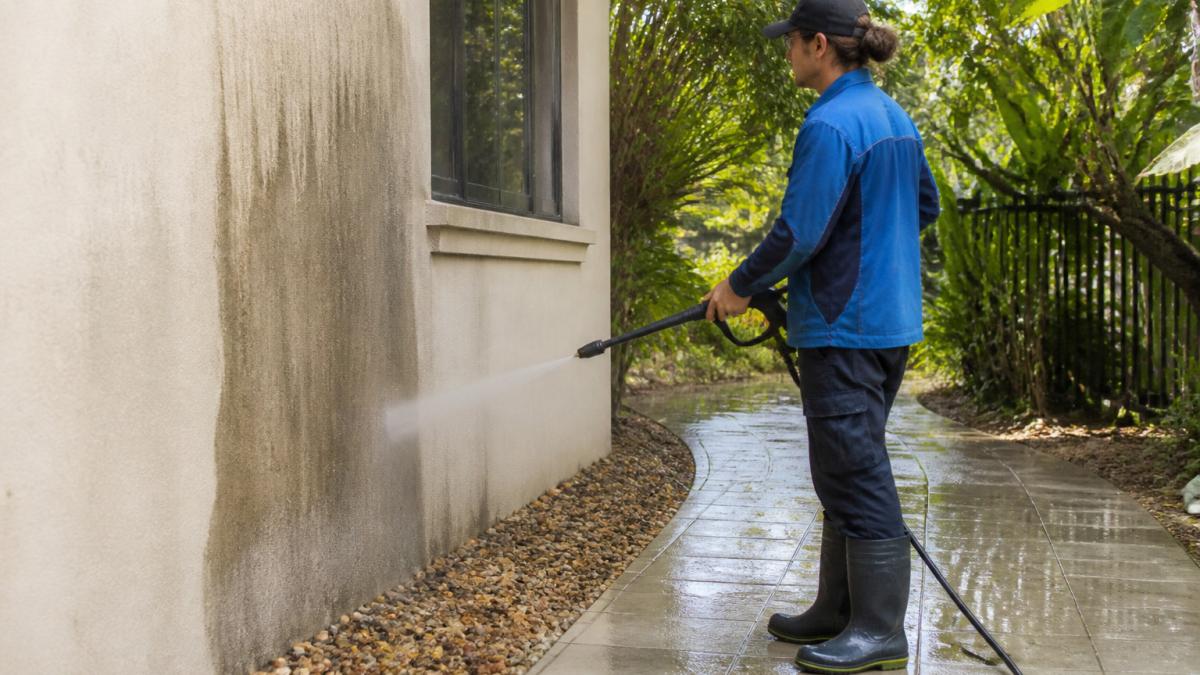
Render and painted masonry can be harmed by high pressure, which can crack render, lift paint and force water behind the coating. Soft washing with a suitable solution and a gentle rinse is generally the safer approach.
Timber weatherboards and decks
Timber can etch and splinter under high pressure, and water can be driven into end grain and joints. Soft washing or low-pressure rinsing is generally preferable.
Colorbond and metal roofs
Colorbond and metal roofs are generally best treated with soft washing, because high pressure can scratch the coating, dislodge fasteners and force water under flashing.
Tiled roofs
Concrete and terracotta tiles can become brittle with age, and high pressure can crack them or displace ridge caps. Soft washing is generally preferred.
Gutters, fascias and eaves
Gutters are usually cleared by hand or with low-pressure rinsing rather than pressure, because force can damage brackets and push debris into downpipes. Fascia and eaves often carry mould and cobwebs that respond to soft washing.
Delicate surfaces
Render with decorative finishes, heritage profiles, leadlight, air-conditioning units and garden structures should be assessed before any powered method is used. Manual scrubbing or a low-pressure rinse is often the only safe option.
Matching method to local conditions
In a humid, high-rainfall climate, organic growth can return quickly on shaded walls and roofs. Soft washing and spray-and-leave treatments are often used on vertical and roof surfaces, because they aim to slow regrowth rather than just remove what is visible. Hard paving still benefits from pressure washing. Runoff should be managed so that cleaning solutions do not reach gardens or stormwater drains.
Signs Your Home Needs Professional Soft Washing
Look out for black streaking on painted walls, green or grey growth on roof tiles, and mould around the eaves. These signs mean organic growth has taken hold, and a gentle, professional treatment is usually more effective than repeated home attempts with a hired pressure washer.
Cleaning before a sale is another common reason to book. Clean exteriors make a strong first impression, and a professional clean avoids the risk of damage just before inspections.
Booking a Free Quote for Your Next Exterior Clean
We provide free on-site quotes with a fixed price in writing, and we respond on the same business day. If you are weighing up a roof, driveway or wall clean, you can see the full range of exterior services and service areas before requesting a quote. For roof work specifically, our roof cleaning service for tiles and Colorbond explains how we approach each material. When you are ready, contact us to request a free quote and we will assess your property on site.
Frequently Asked Questions
What is the difference between soft washing and pressure cleaning?
Pressure cleaning uses a high-volume jet of water to blast dirt off surfaces, which works well on concrete and brick but can etch or force water into softer materials. Soft washing uses low pressure combined with a cleaning solution that sits on the surface and kills mould, algae and organic growth before rinsing. Pricing depends on the surface, the size of the job and the level of growth, so request a free on-site quote for an accurate figure.
Is soft washing safe for Colorbond roofs?
Soft washing is generally considered safe for Colorbond and other metal roofs because it relies on low pressure and a suitable solution rather than force. High pressure can lift coatings, scratch the finish or drive water under flashing, so a careful, low-pressure method is the safer approach. JetSet Power Washing uses safe cleaning methods for Colorbond and metal roofs, and you can confirm the approach for your specific roof when you book a free quote.
Why is soft washing better for render and painted surfaces?
Render and paint can be damaged by concentrated water pressure, which can strip coatings, erode the surface texture and push water into hairline cracks. Soft washing applies a gentle solution and rinses with low pressure, removing mould, algae and dirt without stressing the surface. This can help protect the paint film and reduce the chance of water intrusion behind the render.
Does soft washing remove mould and algae effectively?
Soft washing is designed to tackle organic growth such as mould, algae and moss. The solution is left to dwell on the surface, giving it time to break down the growth at the root rather than only removing the visible layer.